Three days, a 20-litre bag and six pieces of clothing
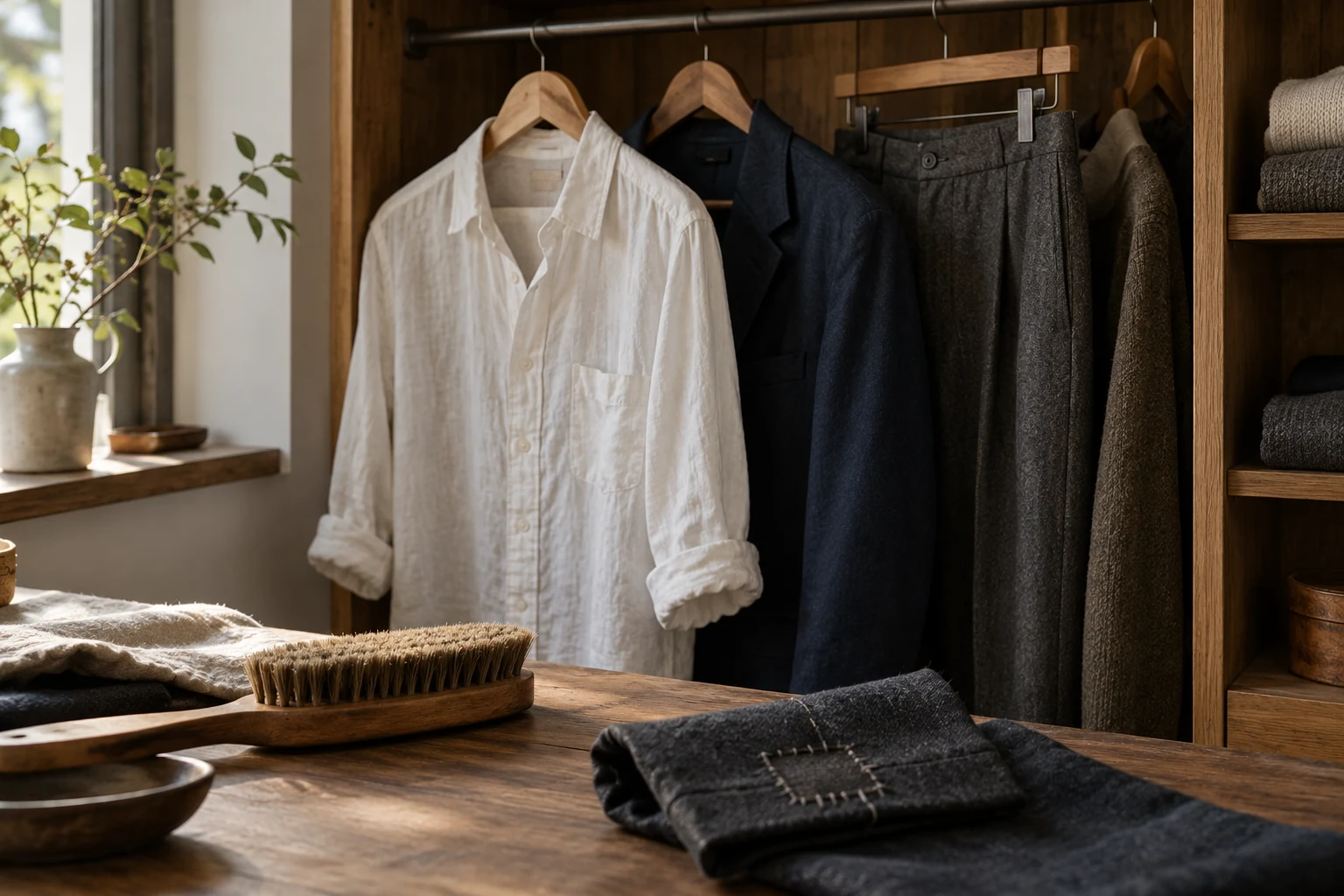
One shirt, two T-shirts, two pairs of trousers and a light jacket. Build combinations instead of packing a separate complete outfit for every occasion.
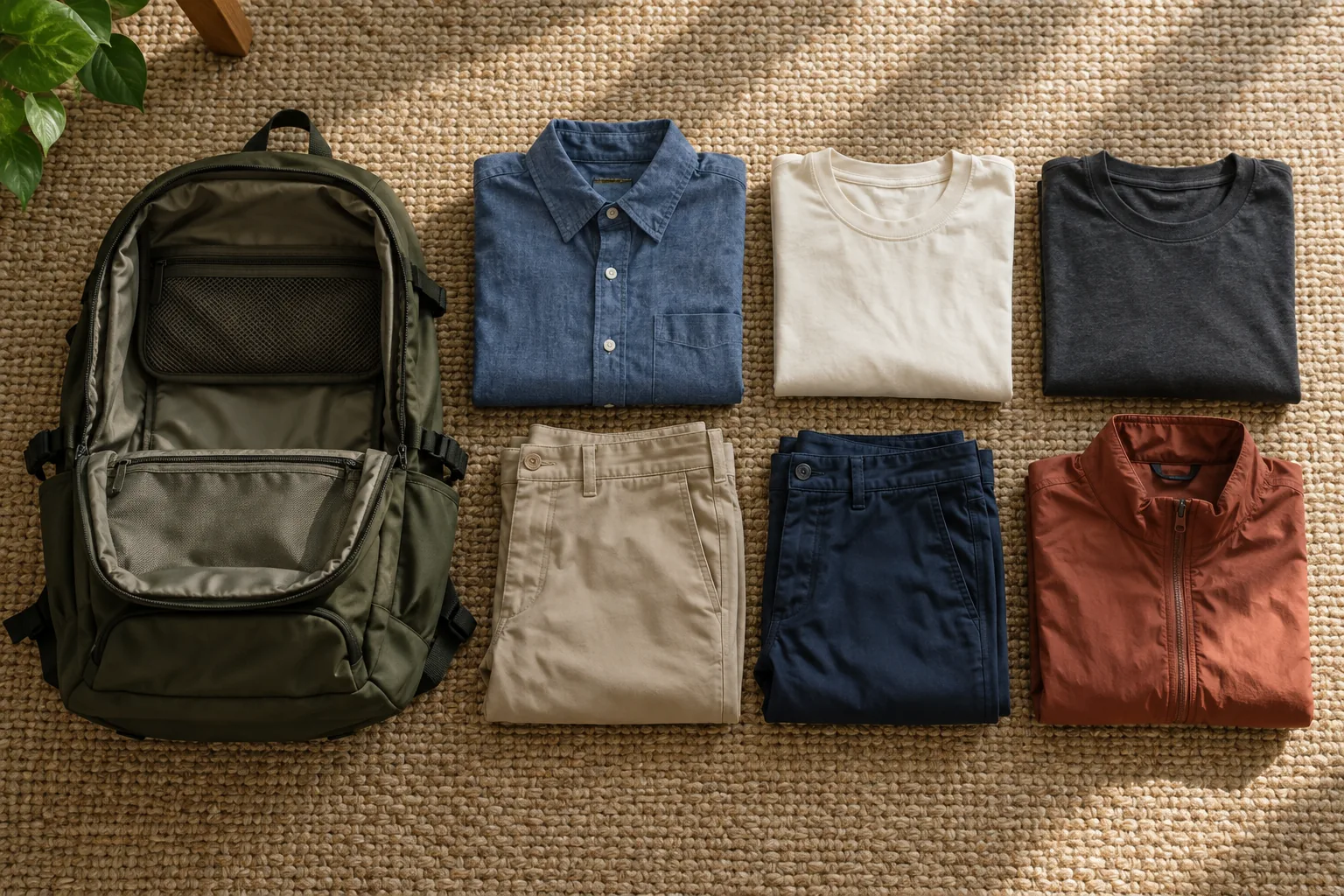
One shirt, two T-shirts, two pairs of trousers and a light jacket. Build combinations instead of packing a separate complete outfit for every occasion.
Treat the bag size as a condition, not a test
This example assumes a short city trip with no laundry, formal occasion or swimming, and one pair of shoes worn throughout. Clothes, weather and bag construction vary, so the list is not guaranteed to fit every 20-litre bag. Essential medical or access-related equipment takes priority. If your needs require a larger bag, change the bag rather than leaving something necessary behind.
Count what you wear as well as what you pack
The six pieces are a light shirt, two different T-shirts, dark and light trousers, and a thin jacket. Wear one T-shirt, the dark trousers and jacket on departure. The remaining three pieces go in the bag, or four if the jacket comes off. Underwear, socks and any separate sleepwear are additional. Mark worn and packed items separately to understand the space you actually need.
Change a combination, not the entire wardrobe
For the second day, consider the light trousers with the other T-shirt, then the shirt in the evening. Leave the shirt at your accommodation until needed if the route allows. On the third day, recombine items only if their actual condition permits. Plan a usable spare top rather than insisting on rewearing something sweaty or stained merely to meet a minimalist target.
Check both trouser hems with the same shoes
A second pair of trousers that needs different footwear can quietly add an entire pair of shoes to the bag. Lay out the shoes with both options and inspect comfort and proportions. A light and dark neutral can simplify combinations, but use colours already in your wardrobe. There is no need to buy new clothes to follow this example.
Pack in the order you will need things
Keep essentials such as medicines and a frequently used cable accessible instead of burying them under clothing. Separate toiletries and include a light bag for used or wet items. Roll or fold according to the garment and the bag; the smallest possible bundle is not always the most useful. Try carrying the packed bag for a realistic period before leaving.
Give every extra item a situation
When adding a spare, write one sentence explaining when you would wear it. Check whether something already packed covers that situation. Distinguish a real weather need from a vague worry. After returning, mark unused pieces and review just one choice next time. A compact bag is a way to learn what your trip requires, not a measure of how little a person ought to own.