A good jacket goes beyond its cloth: tailoring, cashmere and linen
Connect fibre, weave, lining, pattern and fitting before choosing a jacket. Cashmere softness and linen texture become useful only when they suit the way you wear clothes.
Connect fibre, weave, lining, pattern and fitting before choosing a jacket. Cashmere softness and linen texture become useful only when they suit the way you wear clothes.
Do not turn a first touch into a complete verdict
The first difference between jackets is often tactile: cashmere softness or linen’s distinct surface. But clothing is not used only by the hand. It hangs from the shoulders, crosses the waist when you sit and moves with the back and sleeves when you reach. An attractive cloth is a beginning, not a finished jacket.
Instead of ranking fibres, connect them to a purpose. Will the jacket sit beneath a winter coat, remain on in a strongly cooled office or accompany a summer evening out? Write down the season and movements that matter. That makes it easier to enjoy a cloth without making its first impression the sole reason to buy.
Tailoring connects movement with an outline
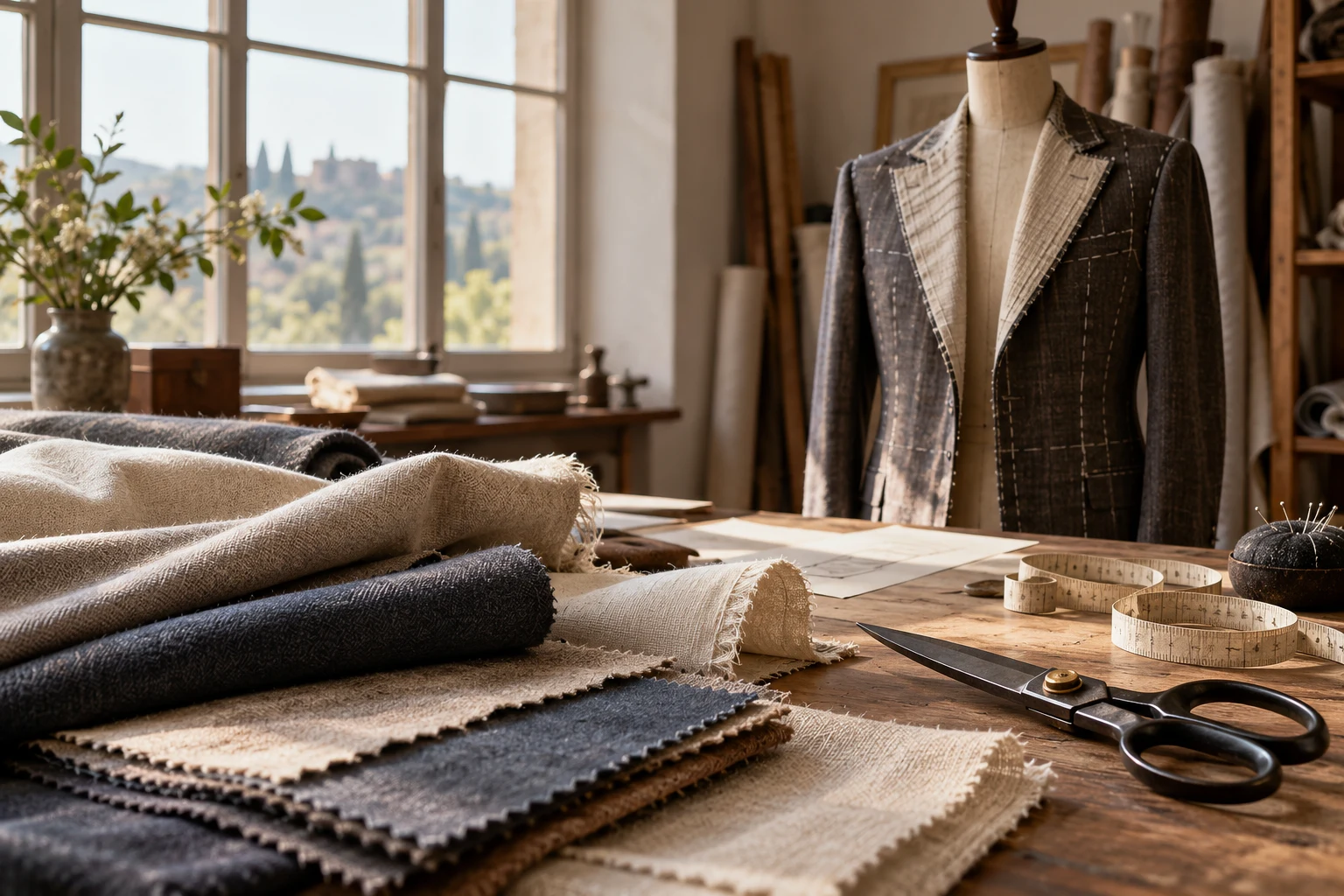
The Savile Row Bespoke Association describes an individually made pattern as central to its process. Banshee of Savile Row, a womenswear tailor, explains its internal canvas as the structure supporting the cloth and lining. The visible outline is connected with work inside the garment.[1][2]
No construction label establishes the quality of every example. Ask which changes a bespoke, made-to-measure or altered ready-made garment can provide within your time and budget. What can be changed at the shoulder or sleeve? How are fittings and further alterations handled? “Handmade” becomes comparable only when the relevant stages are specified. The useful information belongs in the actual agreement.
Cashmere: composition is only part of the garment
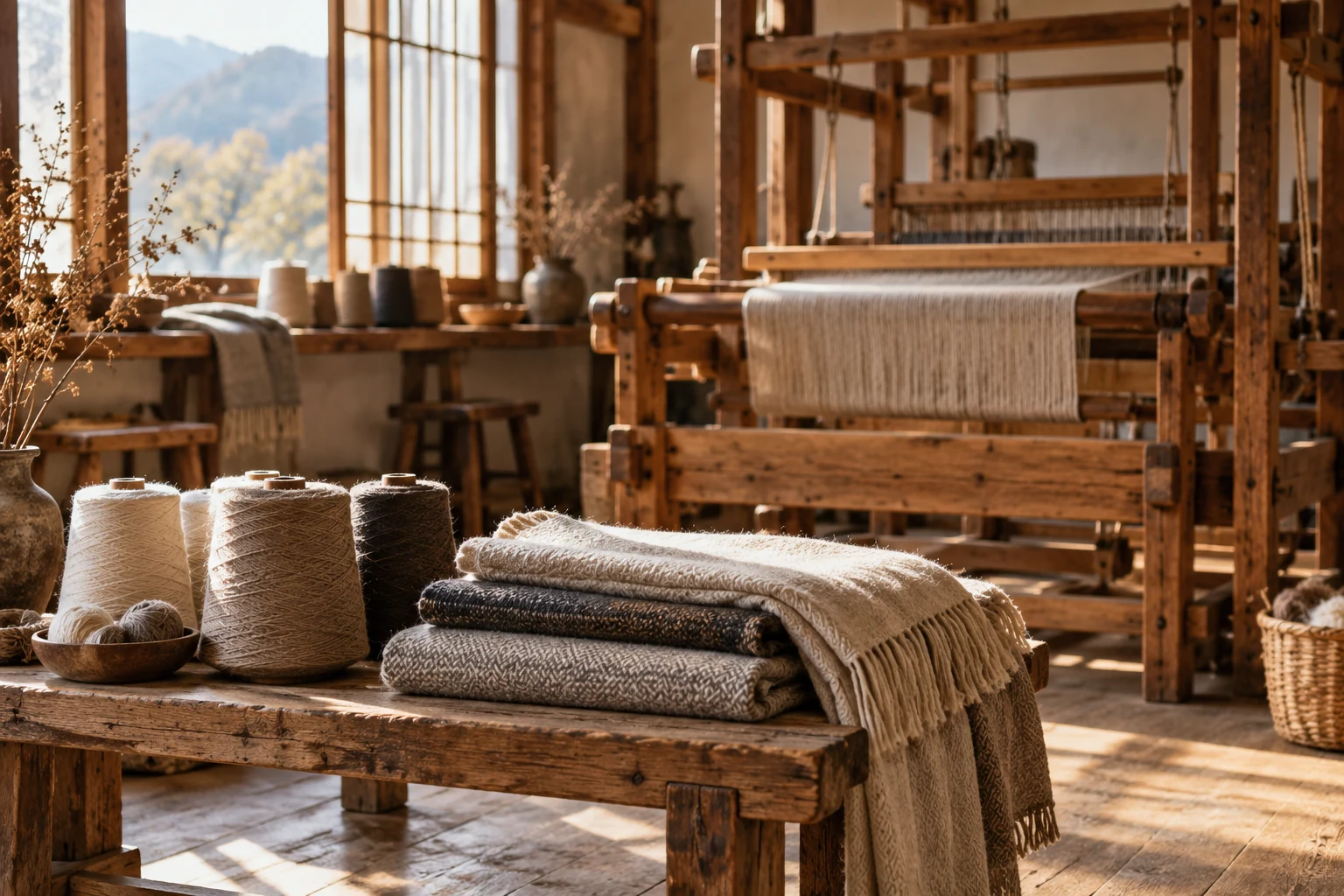
The CFDA’s fibre guide describes cashmere as coming from a goat’s fine undercoat and identifies fibre length and fineness among quality factors. That establishes variation within the material. A cashmere percentage does not explain yarn, weave or knit, density and finishing in the completed garment.[3]
A cashmere jacket and a cashmere sweater may therefore share a fibre name while serving different purposes. Try the garment with an outer coat and your usual bag, then place your arms as you would at a desk. If a particularly soft surface appeals, consider the friction it will encounter and the care you can provide. The softest candidate is not automatically the one you will wear most often.
Linen: put coolness in context
The Alliance for European Flax-Linen & Hemp reports ventilation and moisture-handling properties in tested linen fabrics. Results from a limited set of samples should not become a promise of the same temperature experience in every linen garment. Weave, thickness, lining, cut and environment all form part of the comparison.[4]
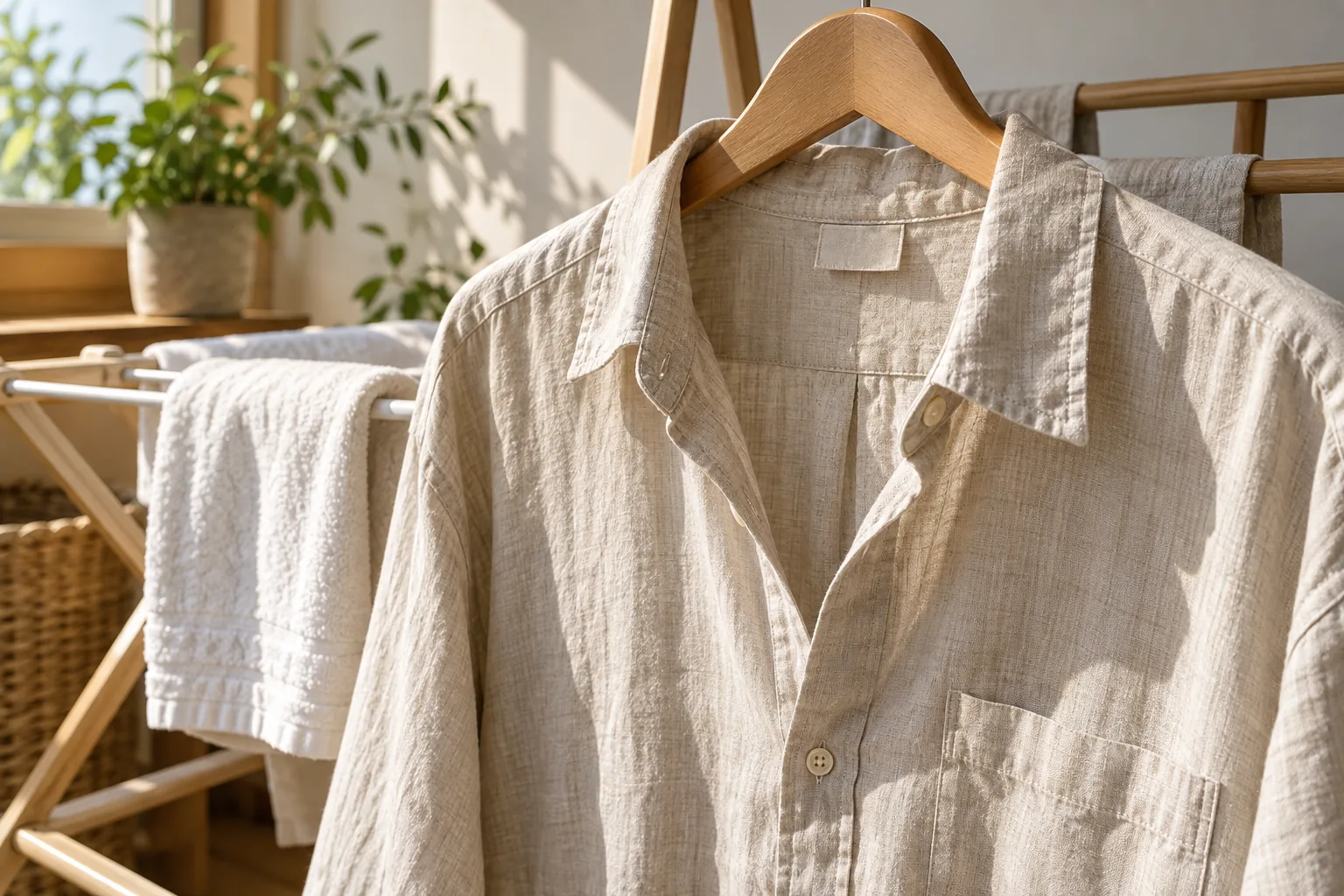
Wear the jacket and notice the inner arms and back. A thin outer cloth may still feel different from what you expected because of the construction underneath. Decide which creases you enjoy and which would bother you during your actual schedule. Ask about the garment’s behaviour after wear rather than assuming that either a blend or pure linen must suit the occasion.
A blend is a design decision to examine
The presence of other fibres alongside cashmere or linen does not automatically make the cloth a lesser choice. Ask what handle and shape the maker intended. Equally, composition percentages alone do not prove improved durability or crease recovery. The yarn, fabric and garment need to be considered together.
Compare similar designs where possible. If colour and silhouette also change dramatically, it becomes harder to isolate what you like about the material. Record whether each jacket feels better standing or sitting. Four headings—touch, weight, movement and care—can keep the decision from resting on a single purity figure.
Read weight together with lining
When discussing cloth weight, confirm the unit. Weight per area and weight per length are different measurements, and neither is the finished jacket’s total weight. A lighter number is not automatically more comfortable or more luxurious. Consider whether the garment supports its intended shape while feeling manageable to wear.
Establish where the lining is used, including sleeves, and try the jacket over the shirt or knit you intend to wear. A lightly lined garment can still have an uncomfortable internal seam or pocket; a lined one may move smoothly over another layer. These questions are ways of anticipating daily sensation, rather than collecting specialist vocabulary.
Relax your showroom posture at the fitting
Stand normally, sit and reach toward an imaginary desk. Notice pressure at the chest and waist, the relationship between collar and neck, and what happens to the hem after moving. A single crease is not a verdict. Explain the activity that creates discomfort.
Make requests concrete: the waist pulls when seated, the back restricts a driving position, or the left cuff catches a watch. Ask how a proposed alteration affects other parts of the garment. Narrowing one area can change movement elsewhere. The goal is a garment that works during a day, not one ideal pose in a photograph.
Use three real situations to narrow the cloth
Someone who sits at work for hours might prioritise back and sleeve movement, chair contact and manageable maintenance. Someone making short visits by car may care more about layering and the feel at the neck and wrist. Someone attending outdoor events will need to consider weather and time outside.
These are not rules assigning cashmere to indoors and linen to outdoors. Each can become different garments. Write three common situations and mark the most important requirements in each. A jacket well suited to the two situations that recur most often may have a clearer place in the wardrobe than an imagined solution to everything.
Read the care label before buying
GINETEX explains that care symbols communicate permitted treatment and take account of factors including colour, finishing and accessories. A fibre name is not a complete washing or ironing instruction. Read the garment’s label before purchase and separate tasks you can manage at home from those requiring professional attention.[5]
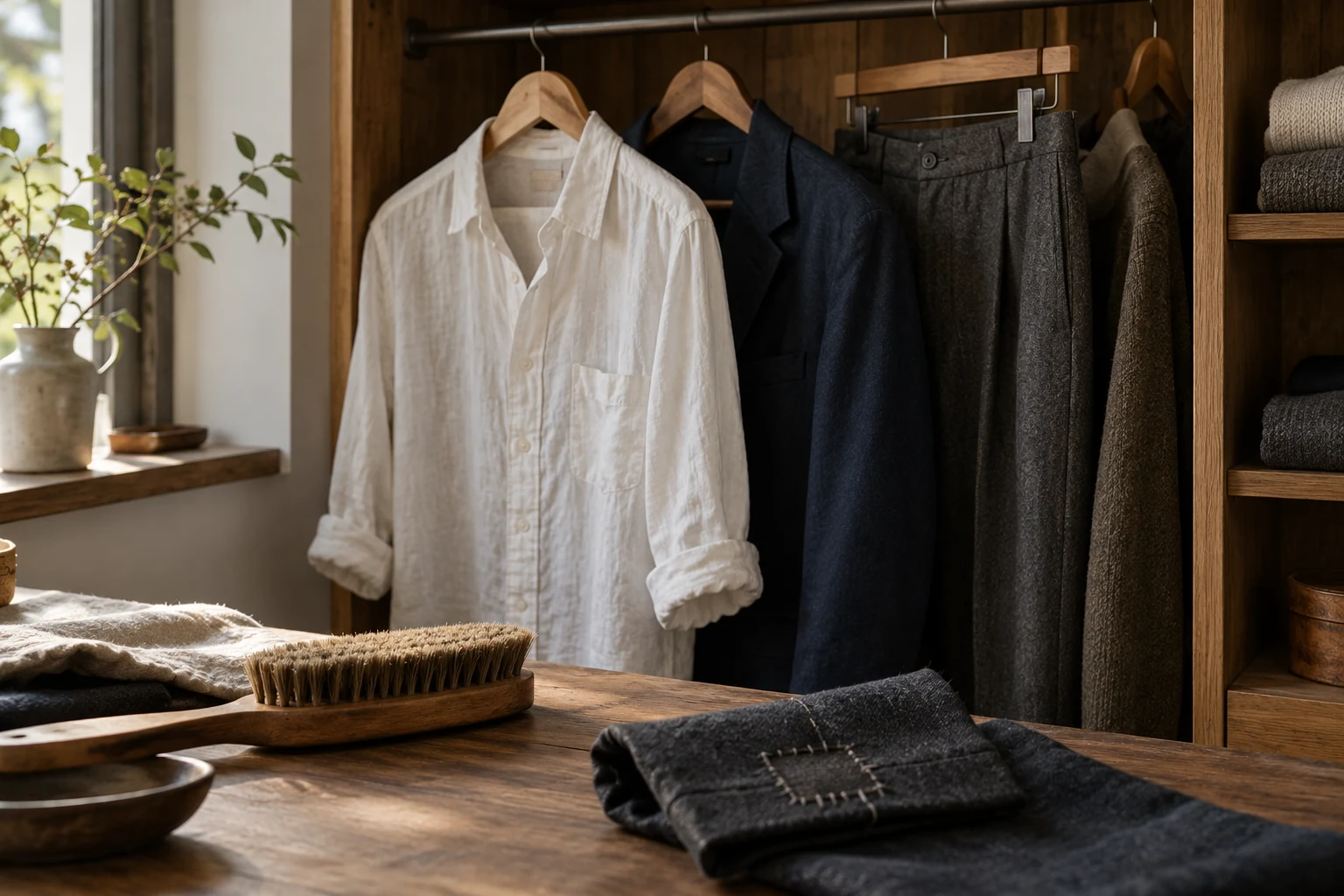
Start with achievable habits: check the garment after use and address stains or loose stitching promptly. If specialist cleaning is needed, include access and cost in the decision. For travel, consider packing and the time available to put the jacket in order on arrival. Clothing that fits your care routine is easier to enjoy repeatedly.
Keep a short cloth comparison note
Try both jackets over the same shirt and repeat the same movements. Record touch, shoulder weight, pressure when seated and movement against the lining. Keep composition and care details so the comparison survives beyond the first impression.
One may feel softer to the hand but less comfortable over a shirt; another may work better at the desk. Choose according to the hours you expect to spend in each situation. If your experience differs from the explanation, ask why before deciding.
Choose an explanation you can understand
When two candidates remain, ask why the maker paired this cloth with this pattern. A useful answer connects season, shape, movement and care rather than simply repeating a prestigious origin or number. Compare it with your own fitting experience and record unresolved problems before purchasing.
Pleasure and practicality belong in the same decision. Enjoy cashmere softness or linen creasing if either appeals. Then establish whether the preference has been translated into a garment that suits your body and habits. A good jacket does more than make you remember the fibre name: it makes you want to wear it again.
Sources and editorial note
The cover is an AI-generated editorial illustration. It is not a documentary photograph of a particular place, product or person discussed in this article.
Sources checked on 1 November 2026. This article combines the public sources below with our own framework for choosing and observing. It is not a first-hand stay, visit or service review. Confirm current arrangements and availability directly for your intended date.
[1] Savile Row Bespoke Association — Bespoke process · View source: www.savilerowbespoke.com
[2] Banshee of Savile Row — Bespoke process · View source: www.bansheeofsavilerow.com
[3] CFDA — Fiber Guide: Cashmere · View source: cfda.com
[4] Alliance for European Flax-Linen & Hemp — Flax performance and properties · View source: allianceflaxlinenhemp.eu
[5] GINETEX — Care labelling · View source: www.ginetex.net