A conversation between plate and glass: whisky, Champagne and wine
Begin with sauce, acidity, sweetness and texture, then compare approaches to pairing whisky, Champagne and wine while leaving room for individual and alcohol-free choices.
Begin with sauce, acidity, sweetness and texture, then compare approaches to pairing whisky, Champagne and wine while leaving room for individual and alcohol-free choices.
Begin with the plate
Which makes the better partner for dinner: whisky, Champagne or wine? The question becomes useful only after asking what is on the plate. Fish with lemon and fish in butter sauce present different situations. A sauce may matter more than the colour of the meat. WSET likewise starts with food characteristics and personal response. Our aim is to choose for a dish, rather than assemble all three drinks for every meal. [1]
The combinations below are editorial examples informed by teaching material and producers’ suggestions, not a ranking established through our own tasting. If a combination feels different to you, record the difference rather than a failure. Pairing is a language for making the next order more precise. It becomes especially useful when it accommodates familiar food, unfamiliar flavours and the option of choosing a non-alcoholic drink.
Describe the food in three lines
Write the dominant taste first: sweet, salty, acidic or hot. Then note texture and preparation: crisp frying, a soft cream or a charred surface. On the third line record sauce and accompaniments. This simple description improves on choosing a drink from the name of the main ingredient alone. The same chicken can invite a different comparison when its seasoning changes; a menu description is only a starting point.
You do not need technical language when speaking to a sommelier or bartender. Say that you enjoy roast aromas but find sweet sauces tiring, or want freshness without an aggressively sharp impression. Add the role you want the drink to play: opening a meal or accompanying one final plate. A well-known label becomes less important once you can describe what the glass should contribute to the occasion.
Wine: notice what the food changes
Food changes the way wine seems. WSET describes interactions involving acidity and the way salt can soften the perception of harsher tannin. Red versus white is therefore too broad a final decision. Consider drying texture, fruit and freshness separately. Two wines of the same colour may play different roles when the food changes, and the effect should be checked against your own preferences. [1][2]
For an editorial starting point, consider roasted vegetables with tomato alongside a wine with clear acidity, or buttered fish with a white offering both freshness and texture. These are prompts rather than guarantees for a grape variety. Sauce quantity, seasoning and the actual wine all matter. Asking what is strong on the plate and what should remain visible in the glass is more adaptable than memorising meat-and-colour rules.
Champagne can take a place at the table
Treating every Champagne as the same light aperitif narrows the possibilities. Comité Champagne’s guidance distinguishes styles including Blanc de Blancs, Blanc de Noirs, rosé, vintage expressions and sweetness levels. Its suggestions also change with preparation, such as plain seafood versus a creamy sauce. Move one step beyond the category name and connect the actual bottle’s style with how the dish is made. [3]
For a first comparison, keep the plate reasonably simple: a roast with sauce served separately, for example, rather than many competing garnishes. Note what changes before and after a bite in ordinary language. Bubbles alone do not guarantee a successful match with every rich dish. Treat the pairing as one encounter involving aroma, acidity, sweetness, temperature and texture, then decide whether you want to repeat it.
Whisky: separate aroma links from intensity
With whisky, an aromatic link can be a useful starting point: smoke, fruit, nuts or grain. Laphroaig suggests grilled seafood and charred vegetables with its 10 Year Old; The Glenlivet offers examples organised around its expressions’ fruit and nut profiles. These are producer suggestions, not a universal table. Establish the character of the actual whisky before applying one food match across markedly different styles. [5][6]
An editorial exercise is to consider the same grilled mushroom or vegetable before and after adding its sauce. If the drink overwhelms the food, record that and request another option. Water or ice should not become a contest about the correct way to drink. For comparison, simply note how it was served. Enjoying an aromatic connection and feeling comfortable with the drink’s strength are separate judgements.
Dessert and chilli need more specific questions
Sweet food can make wine seem less fruity and sweet, and more bitter. That WSET principle makes actual sweetness worth checking with dessert. Comité Champagne suggests sweeter sec or demi-sec styles for certain creamy or fruit desserts. An aroma described as vanilla or honey is not the same information as measured or perceived sweetness. Do not choose a dessert partner from an aromatic descriptor alone. [2][4]
The Macallan’s Rich Cacao provides a documented chocolate-centred creation, but it does not guarantee every chocolate-and-whisky combination. Consider sugar, cocoa, cream and nuts separately. With spicy food, distinguish aromatic spice from chilli heat. WSET notes that alcohol perception can intensify with chilli; if that sensation is unwelcome, discuss a lower-alcohol or non-alcoholic alternative rather than insisting on a particular category. [7][8]
One menu, three possible approaches
Imagine roasted vegetables, fish with butter and a fruit dessert. A wine-led approach might choose one glass around the main dish’s sauce and acidity, without forcing it through dessert. A Champagne-led approach would select a style for the meal and ask separately about the sweet finish. A whisky-led approach could focus on one plate, leaving water or another drink to accompany the rest of dinner.
These are different meal designs, not levels of expense or sophistication. You may want continuity from one bottle, close attention to one plate, or a pace shared with a companion who does not drink alcohol. Avoid reorganising everyone’s food around one person’s glass. Communicate allergies and excluded ingredients distinctly from flavour preferences, so that the kitchen and service team know which conditions are essential.
When comparing with a companion, write your initial impressions separately before discussing them. This helps keep one person’s vocabulary from determining the other’s description. Agreement is unnecessary; each person can leave with a clearer idea of what to choose next.
At home, change one variable at a time
You do not need a collection of bottles to keep a pairing notebook. With the drink already chosen, alter one element of the dish, such as sauce, seasoning or serving temperature. If both drink and food change together, identifying the difference becomes harder. Home dinner need not become a laboratory; one line describing the changed condition is enough. Handle and store food according to your usual food-safety practice.
Record changes rather than scores: an aroma disappeared after food, the glass felt sharper with less salt, or a slightly warmer serving was more comfortable. Do not turn personal observations into rules for companions. People at the same table can want different sensations. Even if you never order that bottle again, the note gives you language for the next conversation with a bartender or sommelier.
At a restaurant, state the conditions first
State your budget, intended quantity, unwanted flavours and time available. For a pairing menu, check the number and size of pours, water and non-alcoholic options, and whether substitutions are possible. Read the price and serving unit even when a label is familiar. A glass, a bottle, a standard pairing and an optional upgrade are different offers; clarity at the beginning makes the meal easier to enjoy.
A useful explanation shows why this glass has been placed beside this dish. If that direction does not suit you, ask for another. For a non-alcoholic option, enquire whether it is separately designed and clarify ingredients when actual alcohol content matters to you. The most satisfying pairing is often the one that allows everyone at the table to explain and enjoy their choice comfortably.
Sources and editorial note
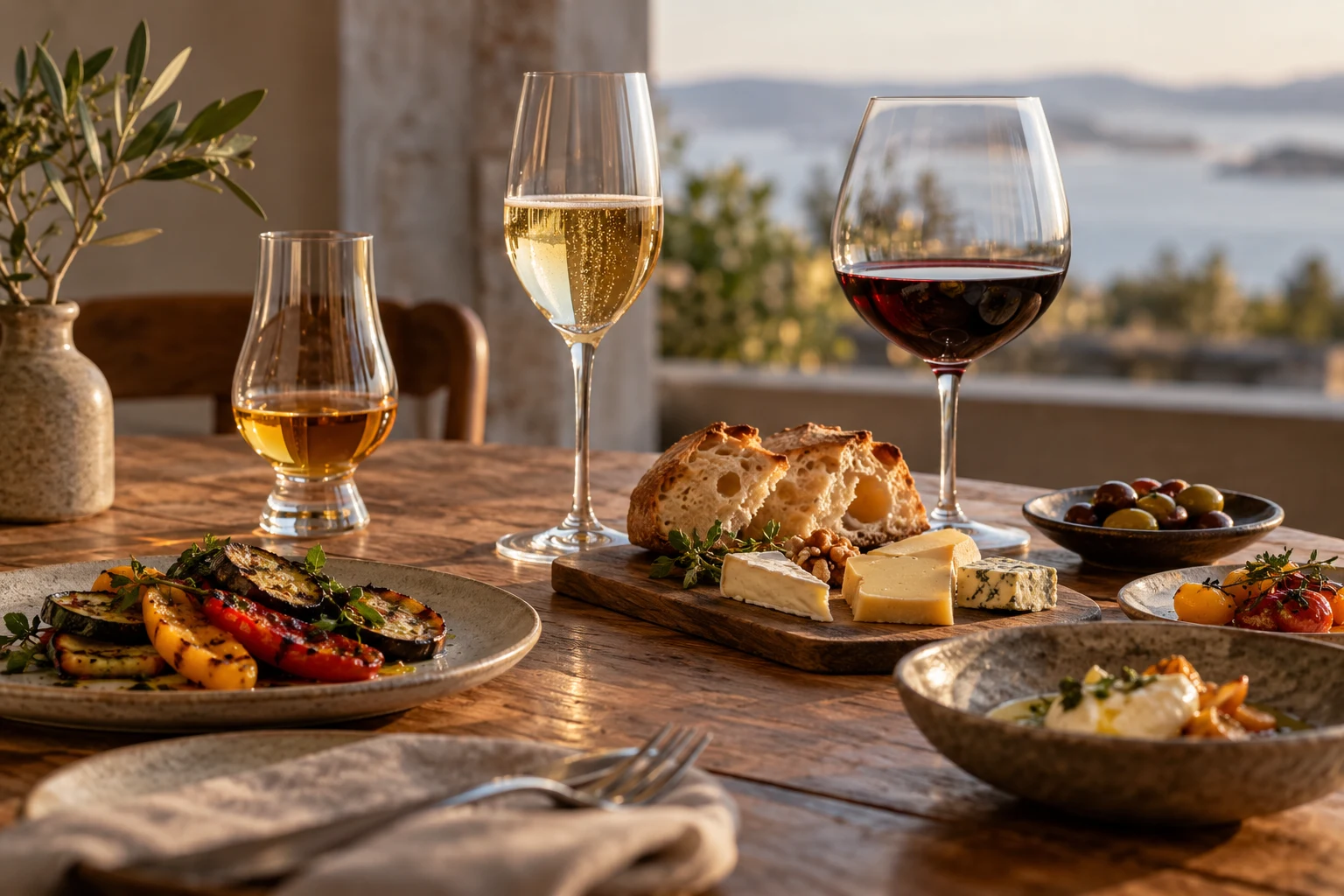
The cover is an AI-generated editorial illustration. It is not a documentary photograph of a particular place, product or person discussed in this article.
Sources checked on 1 November 2026. This editorial guide draws on WSET, Comité Champagne and producer material. Sample menus are hypothetical comparisons, not reports of our own tastings or claims about health effects or product availability.
[1] WSET — Wine food matching essentials · View source: www.wsetglobal.com
[2] WSET — Winter wine and food matching · View source: www.wsetglobal.com
[3] Comite Champagne — From cellar to table · View source: www.champagne.fr
[4] Comite Champagne — Frequently asked questions · View source: www.champagne.fr
[5] Laphroaig — 10 Year Old · View source: www.laphroaig.com
[6] The Glenlivet — Whisky and food pairings · View source: www.theglenlivet.com
[7] The Macallan — Harmony Collection Rich Cacao · View source: www.themacallan.com
[8] WSET — How to pair drinks with spice · View source: www.wsetglobal.com