A weekend watch-care note: water, magnets and storage
Find the relevant pages in your own manual before an outing. Check the model, permitted activities and storage habits instead of relying on a water-resistance number alone.
Find the relevant pages in your own manual before an outing. Check the model, permitted activities and storage habits instead of relying on a water-resistance number alone.
Identify the exact model
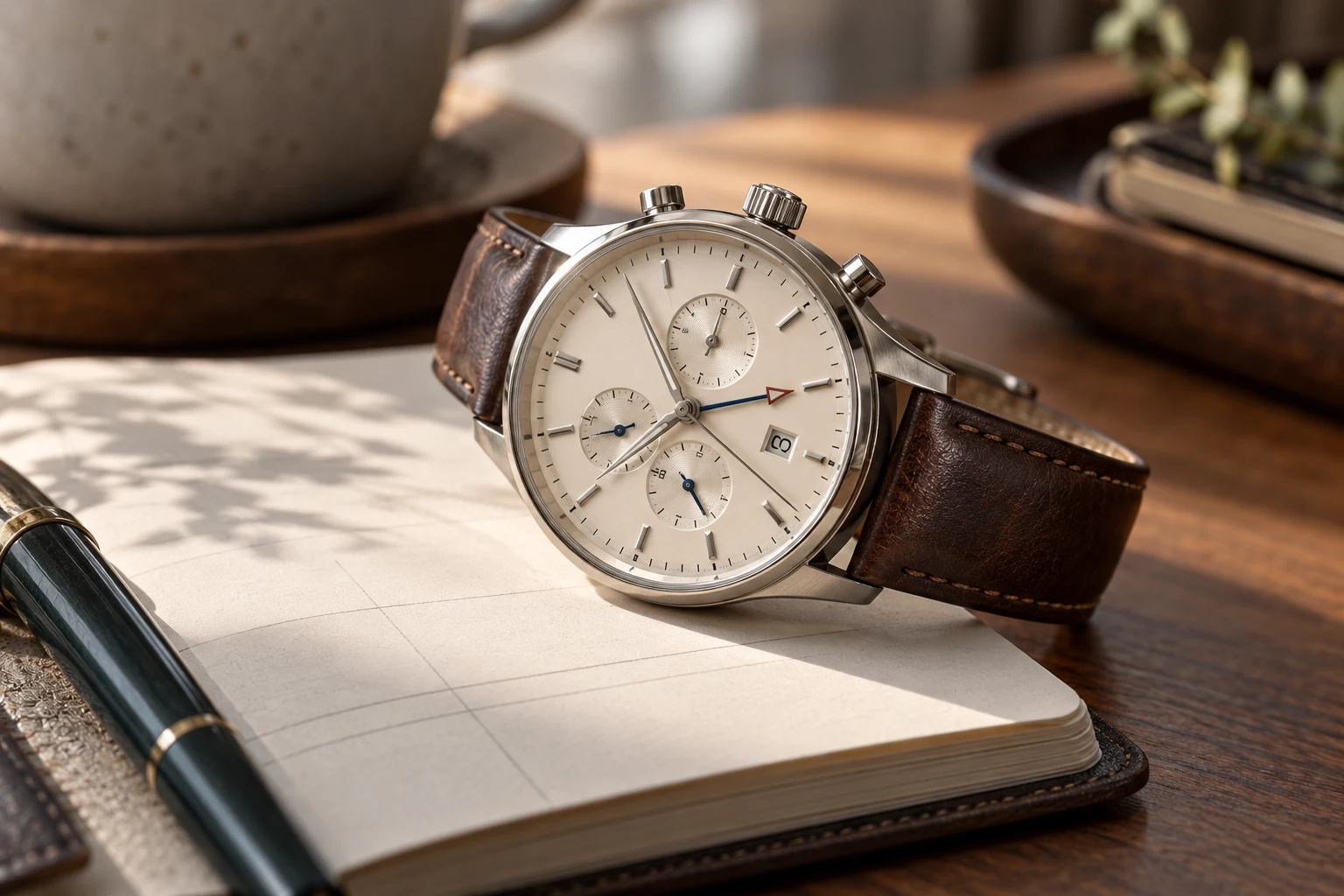
Start with the model or movement reference rather than a brand-wide search. Mark the manual's sections on water exposure, crown operation, date adjustment and servicing. Do not experiment with an unfamiliar crown operation to discover how it works. This is a list of questions to check, not an operating manual for every watch.
Consider condition as well as the marking
Seiko explains that water resistance is not permanently guaranteed and can be affected by ageing gaskets or deformation after a shock. Check whether your model permits the intended activity and whether its condition is known. An old or recently knocked watch may need assessment before exposure. Strap materials have their own care requirements; the case rating alone does not settle those.
Avoid operating controls while wet
Seiko's guidance says not to operate the crown or buttons when a watch is wet. After use, gently wipe external moisture and sweat with a soft dry cloth and follow the model's instructions. Moisture inside the crystal or other unusual behaviour should prompt service advice rather than home heating or disassembly. Reference: View source: www.seikowatches.com
Review nearby magnetic objects
Magnetic bag clasps and accessories are worth considering when reviewing where a watch is kept. Seiko explains that magnetism affects different movement types differently, and mechanical watches can remain magnetized after removal from the source. A timing change alone does not diagnose the cause. Record when it began and any change in storage or impact, then ask an appropriate service provider. Reference: View source: www.seikowatches.com
Give the watch a separate resting place
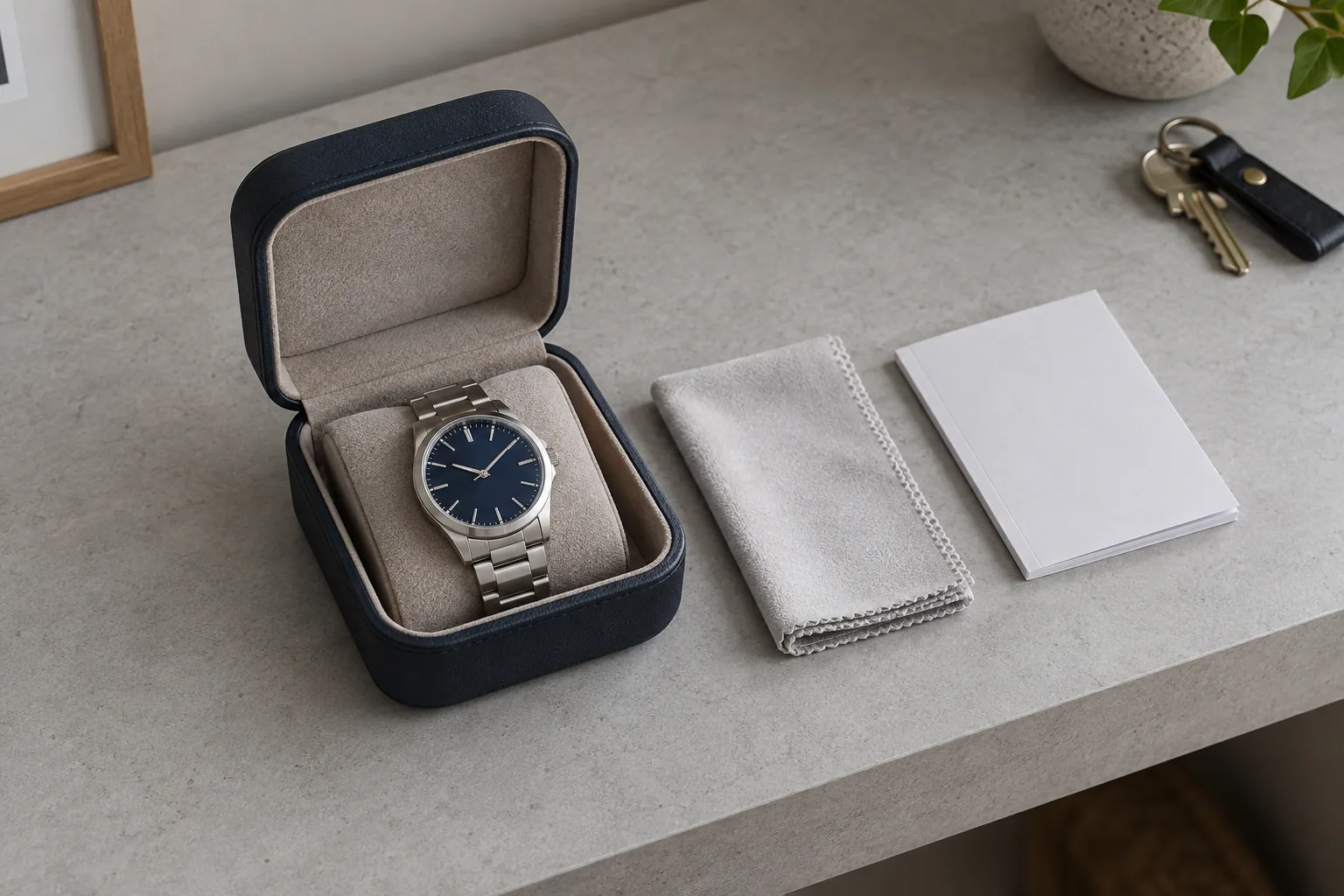
If keys, coins and a watch share one shelf, choose a stable soft place for the watch so they do not strike one another. When storing several watches, check where cases and bracelets meet. Avoid leaving it loose in a bag where it may be knocked or where moisture remains. A deliberate location is more useful than buying elaborate storage without first reviewing the habit.
Prepare four lines for a service inquiry
Note the model, when it last seemed normal, recent environmental changes and the current symptom. A specific sequence is more useful than declaring a magnetism fault yourself. Date-setting restrictions also vary by movement, so do not copy a time window remembered from another watch. The purpose of the note is to reduce guesswork and explain what happened to a qualified service provider.