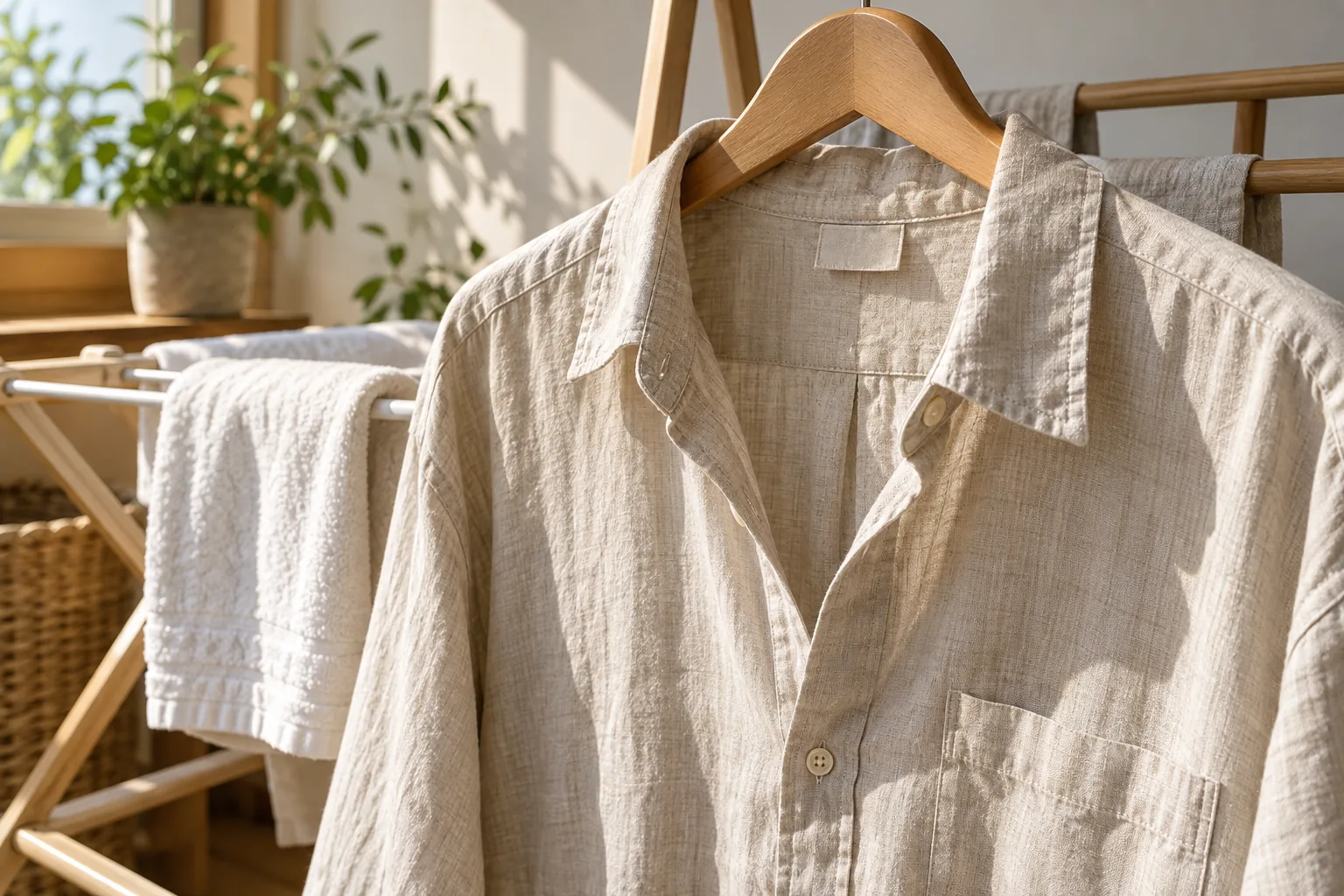
Clothes worth wearing for years: a decision that survives ten wears
Look beyond the first touch to movement, repair, manageable care and actual use. Build a personal buying standard by checking jackets, knitwear and linen clothing over time.
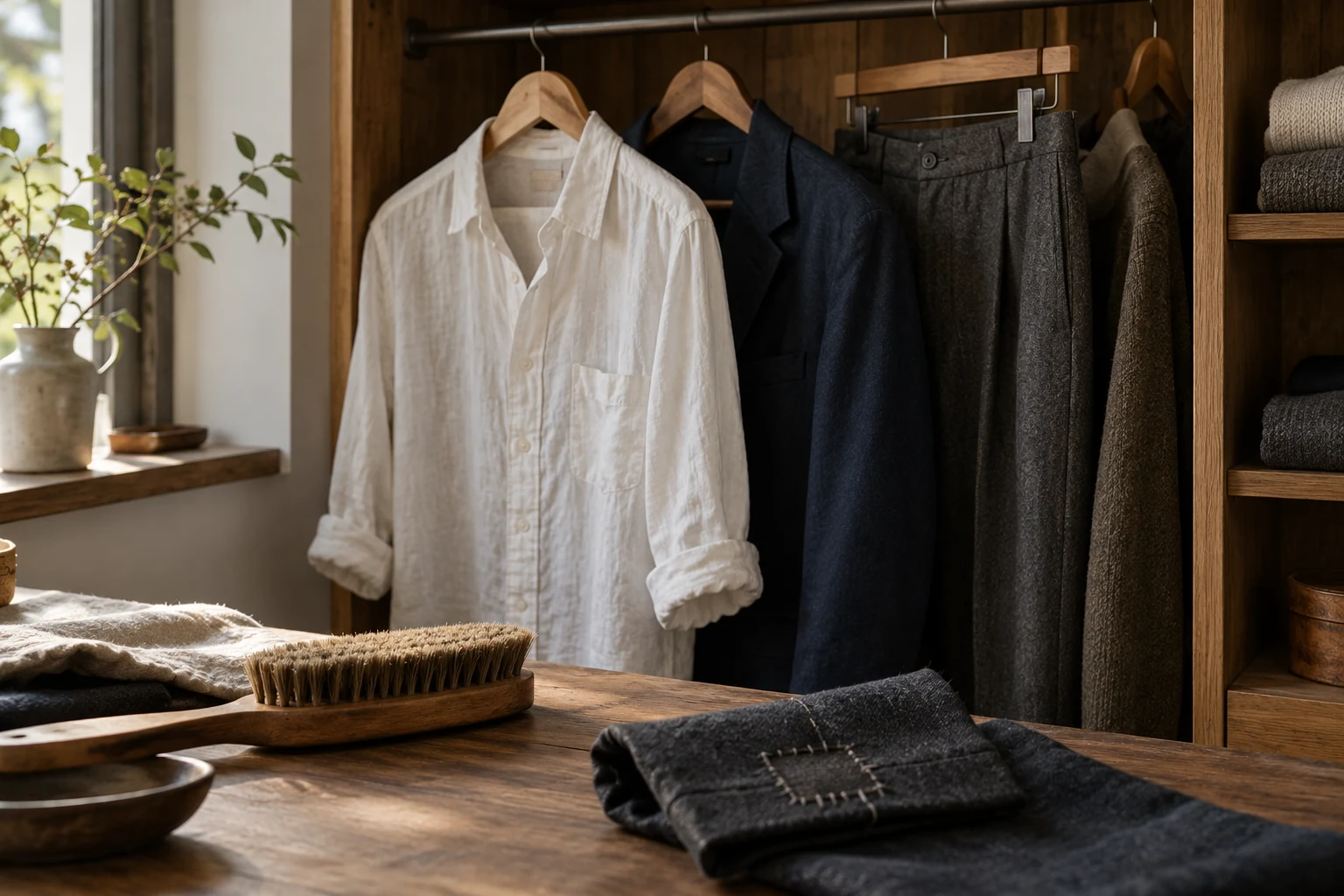
Look beyond the first touch to movement, repair, manageable care and actual use. Build a personal buying standard by checking jackets, knitwear and linen clothing over time.
Stored for years is not the same as worn for years
A garment that has hung in a wardrobe for a decade may have been used very little. It might never have fitted, or its care requirements may have kept it waiting for a special occasion. Separate time in storage from time spent comfortably in use. The question includes whether you reach for it on an ordinary Tuesday.
Start with three frequently worn pieces you already own. Record the comfortable and awkward parts, compatible shoes and changes after cleaning. Identify whether colour, movement or useful pockets explain their success. This is a way to improve the chance of repeated use, not a certificate predicting every garment’s lifespan.
First criterion: fit during movement
Button a jacket and sit, climb a step in trousers, and reach forward in a shirt. A striking standing outline may not justify discomfort during ordinary activities. Test the movements you repeat, using the layers and bag you normally wear when practical.
Do not assume all discomfort will disappear with familiarity. Establish what alteration can actually change. Waist or hem work and shoulder reconstruction are different tasks, with possibilities dependent on the garment. Ask for the specific adjustment, likely result, cost and timing rather than accepting “alterations possible” as a complete answer.
Second criterion: look inside and at points of use
Where inspection is permitted, examine button backs, pocket openings, sleeve interiors and hems. Notice loose threads, seams already opening and construction that appears inconsistent with the design. No single visible detail, including dense stitching or matched pattern, proves overall quality.
Inspect the places your own habits will stress: the shoulder beneath a bag strap, the phone pocket or the elbow at a desk. Do not damage a shop garment by pulling it to test strength. Ask about maintenance and repairs after repeated use. A decorative feature that continually catches or presses may make a beautiful garment difficult to live with.
Third criterion: do not decide from one pill
Johnstons of Elgin’s cashmere care guide explains that loose fibres may form pills through friction during early wear and describes gentle removal with a suitable tool. Pilling alone does not make every garment defective, nor does that explanation make every form of damage normal. Location, extent and thinning also deserve attention.[1]
Follow the product’s instructions and avoid cutting hastily into yarn or testing an unfamiliar tool on the most visible area first. If a problem recurs, document purchase, wear and care history and ask the seller. Long use is not about tolerating every change; it includes recognising when a change needs assessment or repair.
Fourth criterion: can the care fit your life?
GINETEX explains care symbols as instructions for permitted treatment of the completed product. Fibre names alone cannot establish a washing or ironing method; colour, finish, lining and accessories matter too. Ask for help with an unclear label before buying.[2]
Care has a cost in space and time as well as money. Is there room to dry the garment as required? Is suitable professional cleaning accessible? Can it be put in order after travelling? Prefer an achievable routine to a promise that buying a garment will transform your habits. A fine material is easier to enjoy when caring for it is realistic.
Habits for wearing days and storage days
Woolmark’s guidance addresses label-appropriate cleaning alongside airing, resting and storage. The useful approach is to assess the garment’s condition and requirements instead of cleaning every item identically after each use. Airing is not a substitute for every stain-removal or hygiene need.[3]
Make a brief inspection before putting worn clothes away: loose buttons, stains and forgotten objects in pockets. At the season’s end, organise storage according to the product and look for moisture or pest problems. A regular look at the garment’s condition can be more useful than buying an elaborate collection of tools without using them.
Fifth criterion: is there a route to repair?
Huntsman’s Inherited Garment Service offers an example of a maker helping a new owner wear an existing garment again. It establishes a service, not a promise that every old piece can be altered to every body. Suitability, scope and cost require assessment of the actual item.[4]
Ask about spare buttons, fabric remnants, repair contacts and guarantee terms. Can a zip or lining be replaced? Does the brand accept repairs, and can an independent specialist work with the construction? Keep material, purchase and earlier repair information. Such records can help the next person understand the garment even if the original seller is no longer available.
Sixth criterion: does one purchase demand three more?
Clothes need a place in the wardrobe to be used regularly. A jacket that requires new trousers, shirt and shoes may wait much longer to be worn. Imagine two combinations using what you already have and check them with photographs or notes. Compatibility is more concrete than a general claim that a colour is versatile.
This does not require a wardrobe of neutral basics. A distinctive colour or pattern can last in use if you enjoy and care for it. Ask why you expect to keep liking it rather than relying on a promise that it is timeless. Occasionwear can have value without meeting the same frequency target as everyday clothing.
Cost per wear is a record, not a prediction
As an explicit example, a garment costing KRW 600,000 and actually worn 100 times has a purchase-only cost per wear of KRW 6,000. One costing KRW 300,000 and worn ten times yields KRW 30,000. This arithmetic does not establish that expensive clothes are economical. Future use is easy to overestimate; record actual wear and include cleaning and repairs.
A date, occasion, discomfort and care action are sufficient notes. After roughly ten wears, compare experience with the original expectation. Patterns in frequently chosen clothes can inform the next purchase. If something remains unused, consider alteration, a different purpose or letting it go rather than enduring discomfort to justify money already spent.
Describe an alteration in one clear sentence
Explain the problem rather than asking only for a better-looking result. Is excess waist fabric the concern, or does the garment slip when walking? Consider the usual shirt and watch when changing sleeves. Agree on the alteration line, cost and limits beforehand.
At collection, repeat the movement that caused discomfort. Record what improved and what remains, and ask about further adjustment. Keeping a garment in use can include considered change rather than preserving every original detail.
The buying criteria that remain after ten wears
Ten wears are not a durability test for the entire life of a garment. They are an opportunity to notice daily conditions a fitting missed: an awkward pocket, recurring creasing, the shape after cleaning or whether you choose it without a special occasion. The record is intended to clarify your needs rather than assign a universal score.
Bring those observations to the next purchase. Look for material, construction, repair possibilities and manageable care that meet your taste. An old brand name or high price cannot make that connection for you. Lasting clothes continue to be chosen through ordinary days after the excitement of the first encounter has passed.
Sources and editorial note
The cover is an AI-generated editorial illustration. It is not a documentary photograph of a particular place, product or person discussed in this article.
Sources checked on 1 November 2026. This article combines the public sources below with our own framework for choosing and observing. It is not a first-hand stay, visit or service review. Confirm current arrangements and availability directly for your intended date.
[1] Johnstons of Elgin — Caring for Cashmere · View source: johnstonsofelgin.com
[2] GINETEX — Care labelling · View source: www.ginetex.net
[3] Woolmark — Caring for Wool · View source: www.woolmark.com
[4] Huntsman — Inherited Garment Service · View source: www.huntsmansavilerow.com