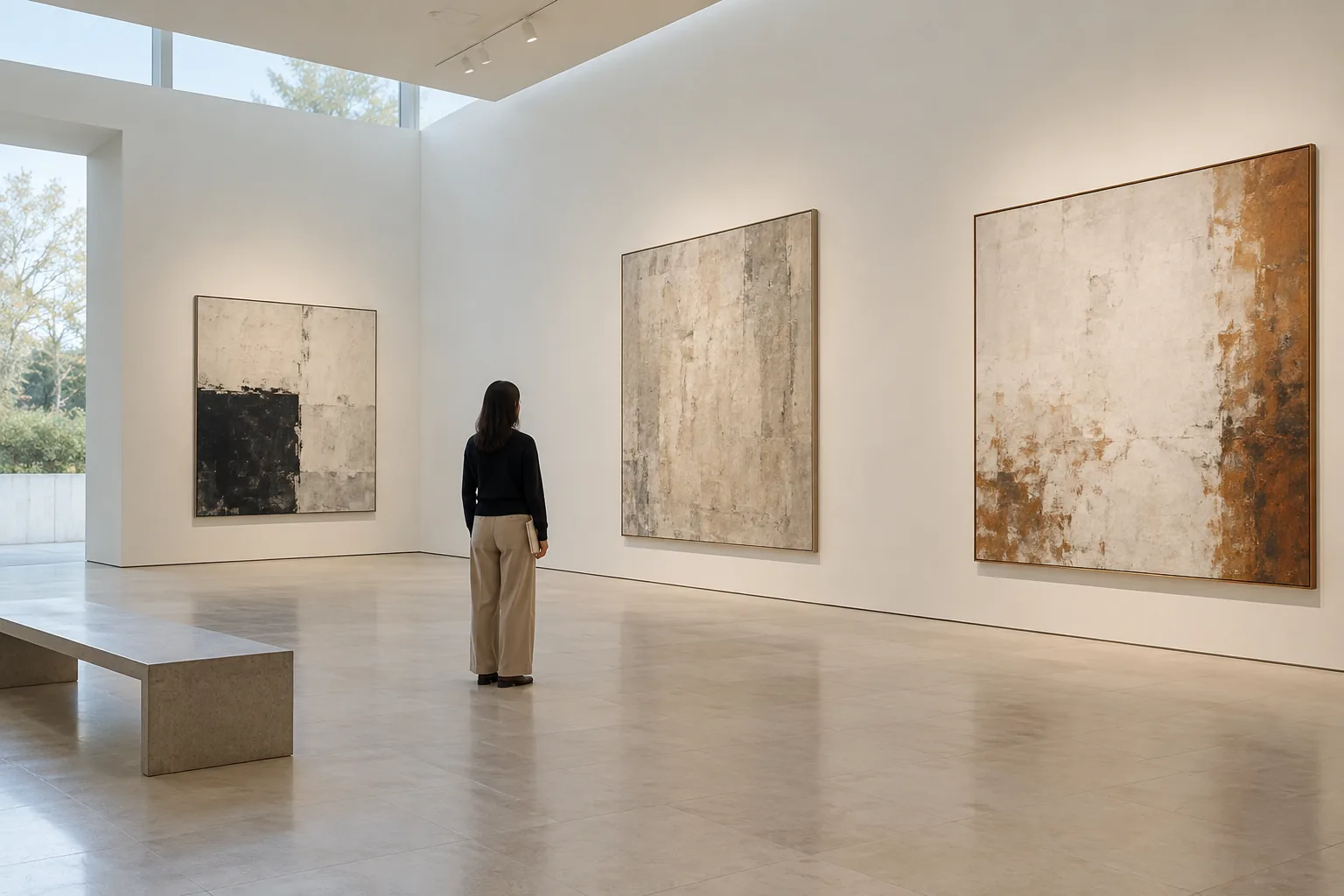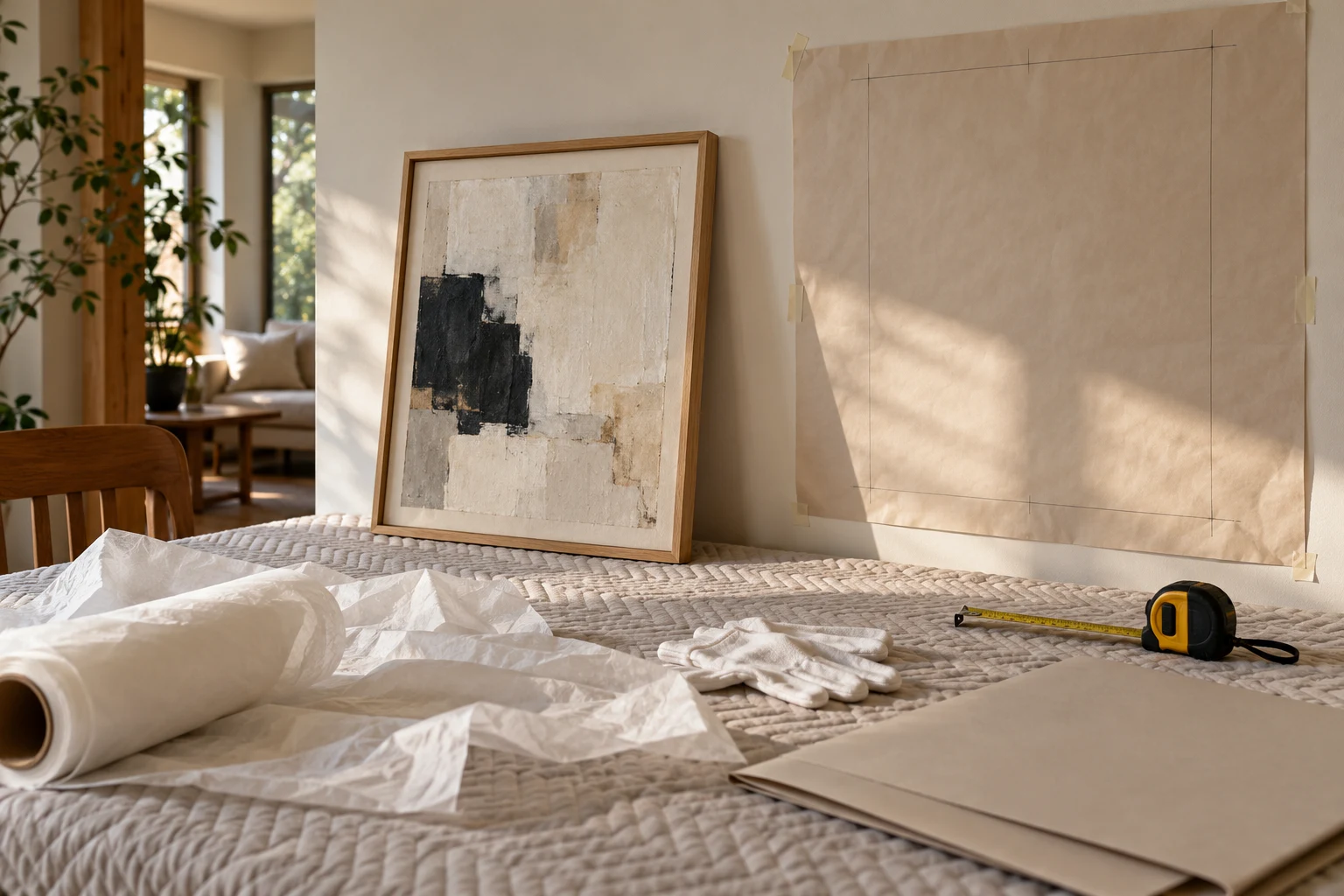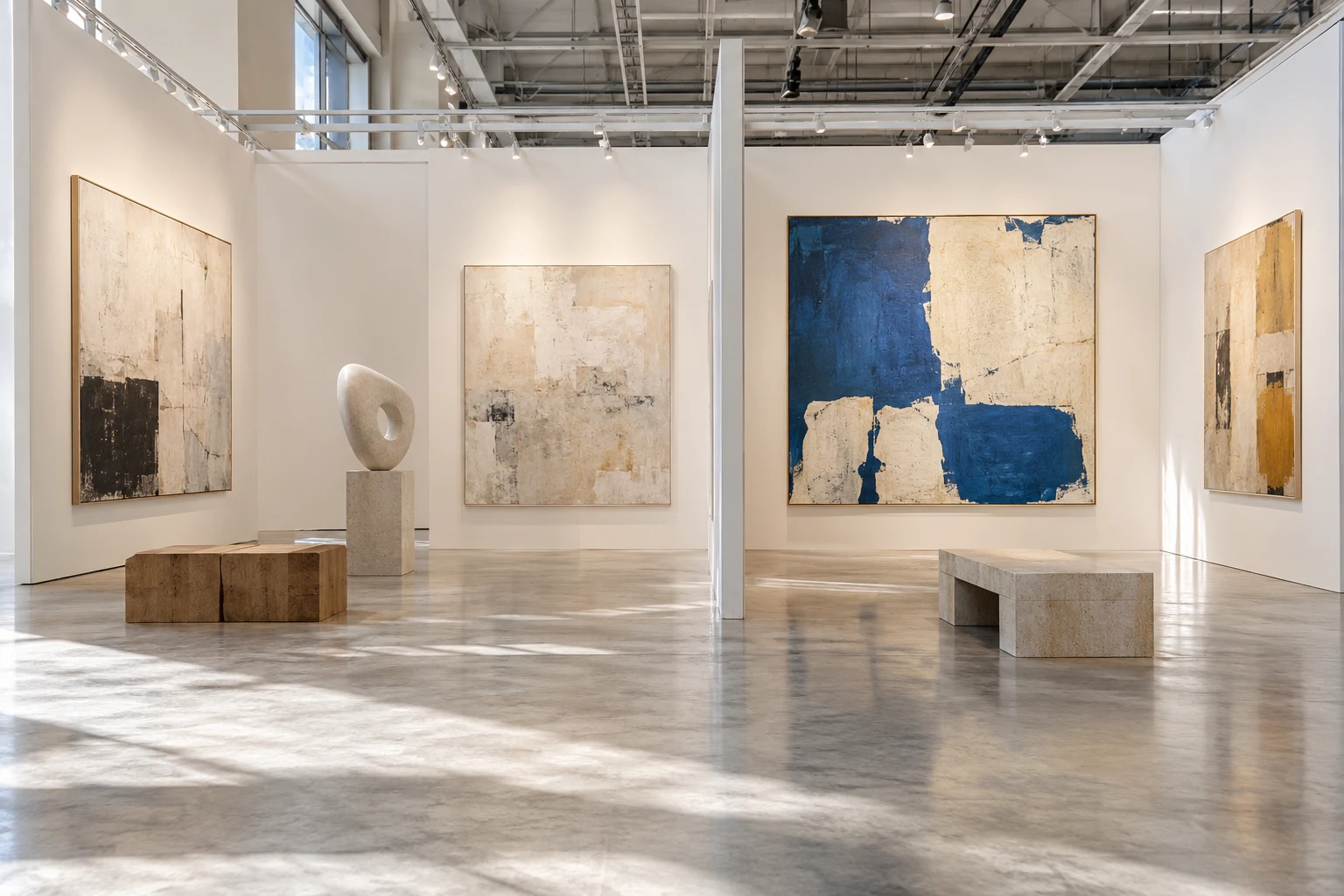
Photographing art with a phone: perspective, reflections and useful notes
Check permission, make one complete view, add a detail and record the title. A useful gallery photograph needs context as well as pixels.
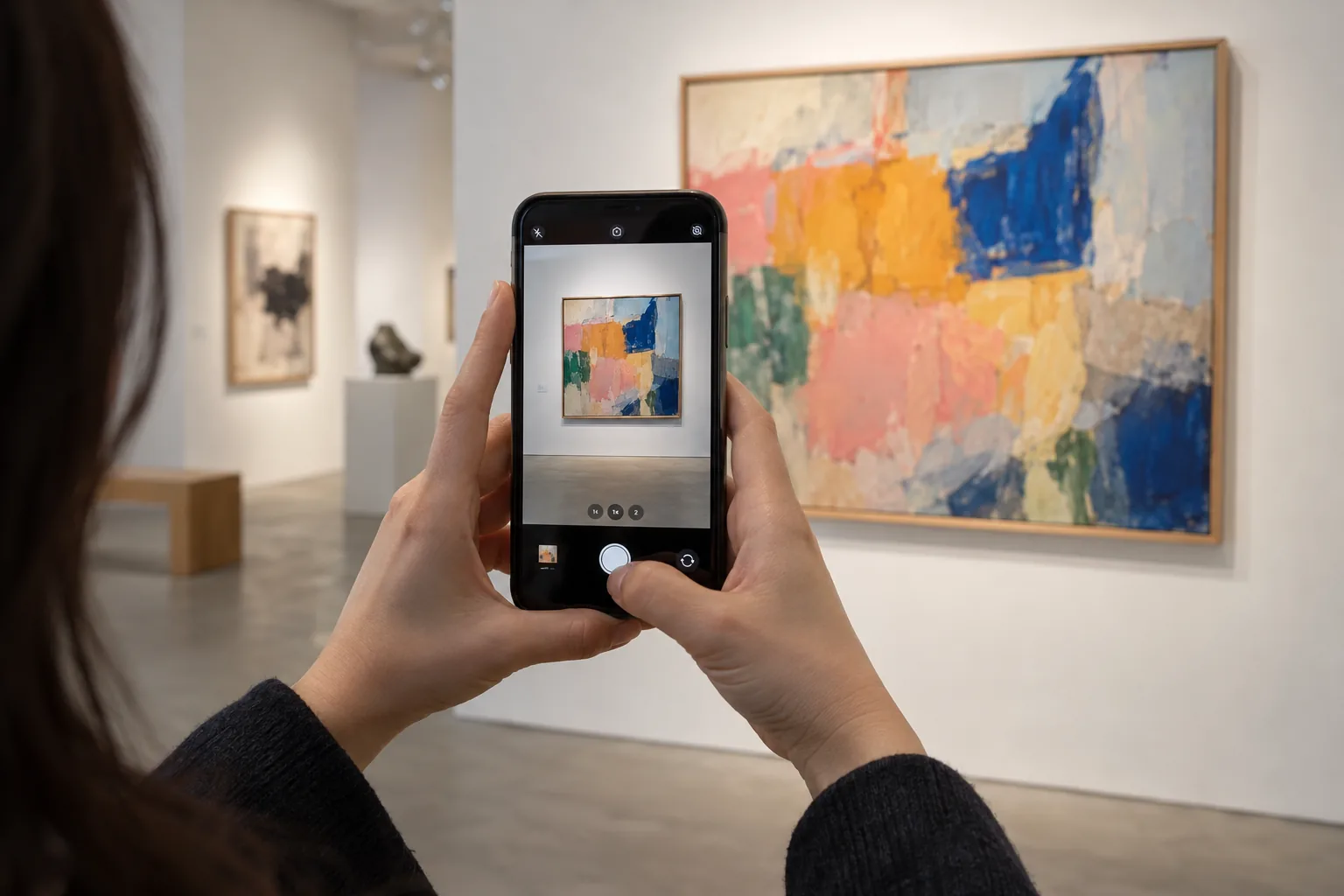
Check permission, make one complete view, add a detail and record the title. A useful gallery photograph needs context as well as pixels.
Check permission before opening the camera
Photography rules can vary by venue and by work. Read the notices and ask staff if uncertain; flash, tripods and video may have different conditions. Permission for a personal record does not automatically include publication or commercial use. If photographs are not allowed, record a title and location instead. Keep circulation clear and stay behind any viewing boundary.
Link one complete view to a title
Start with the whole work where permitted. An attractive fragment can be hard to identify later. Record the title and artist in a note, or photograph the label if allowed and keep it next to the artwork image. Finish one work's record before moving to another, rather than collecting all labels at the end. Being able to find it again may matter more than resolution.
Move yourself before correcting perspective
If a rectangular frame looks trapezoidal, review your position and the angle of the phone. Face it straight on where space and visitor flow allow. Leave some room around the edges rather than filling every corner. Keep the original if making a perspective correction later, because correction may crop content. Do not occupy a viewpoint at the expense of other visitors.
Screen brightness does not remove a reflection
A light or your own shape reflected in glazing will not disappear merely because you darken the phone screen. Move slightly within the permitted area or alter the angle and notice the trade-off with perspective. Do not brace the camera against the frame. If glare remains, make a note about it and use words to describe the colour or surface you saw in person.
Explain what a detail photograph shows
If a brushmark, join or small feature matters, take a permitted detail and name its position. A close view without a location can be difficult to understand later. Notice that a phone may adjust colour and contrast automatically. Use the image to support looking at the work, and stop after the useful views rather than spending the visit producing a perfect reproduction.
Make an exhibition folder and one personal sentence
Group photographs by exhibition and visit date, keeping the complete view, title and detail together. Select a useful image from near-duplicates. Add one observation that the photograph misses, such as the height of paper behind glass. Before sharing, recheck the venue and artwork's guidance and other visitors' privacy. The record should help your future self explain what you saw.