One exhibition in sixty minutes: three works and one page of notes
Choose a few works to look at carefully. Separate observation from interpretation, read the label, then return with a new question.
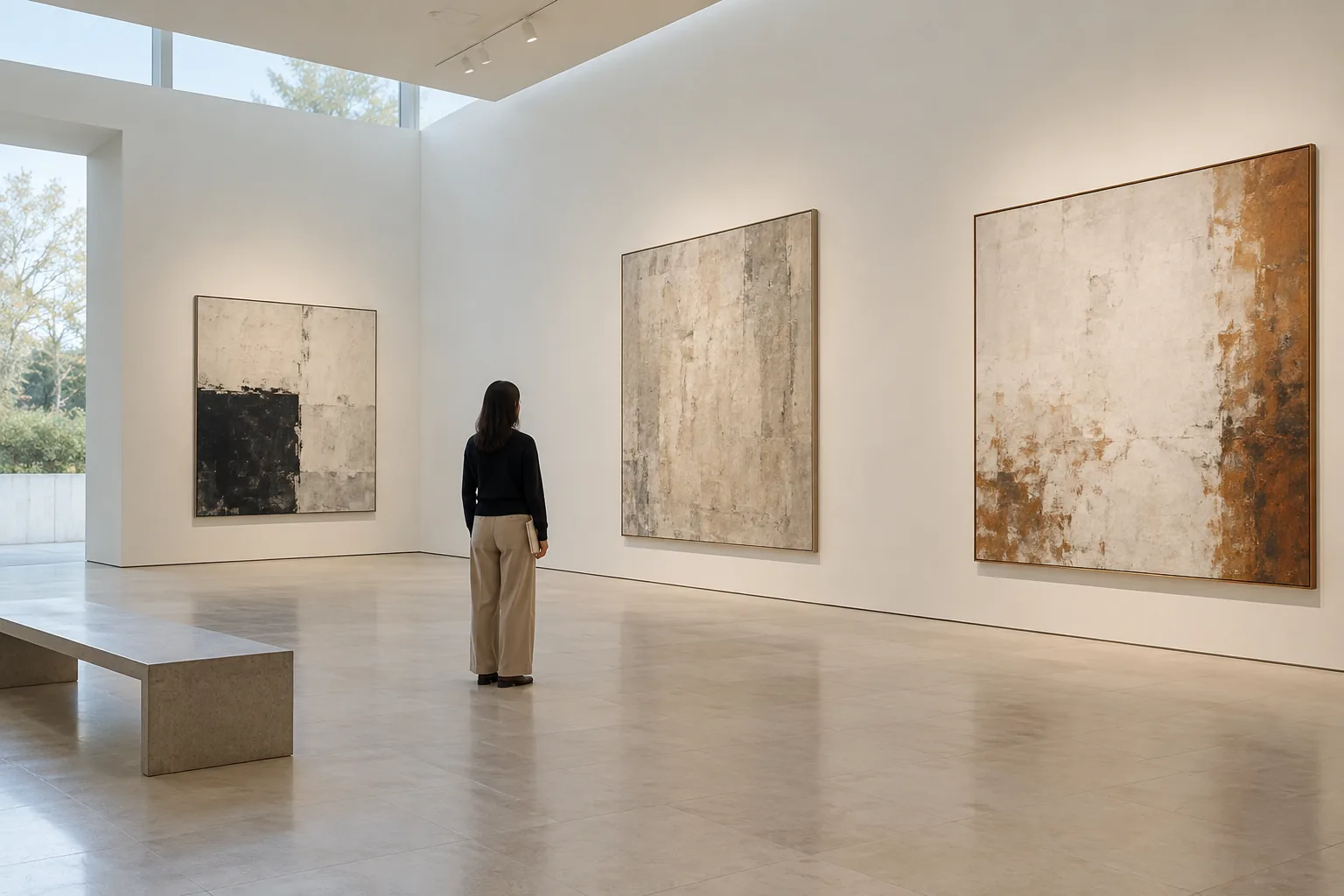
Choose a few works to look at carefully. Separate observation from interpretation, read the label, then return with a new question.
Do not divide the hour by every artwork
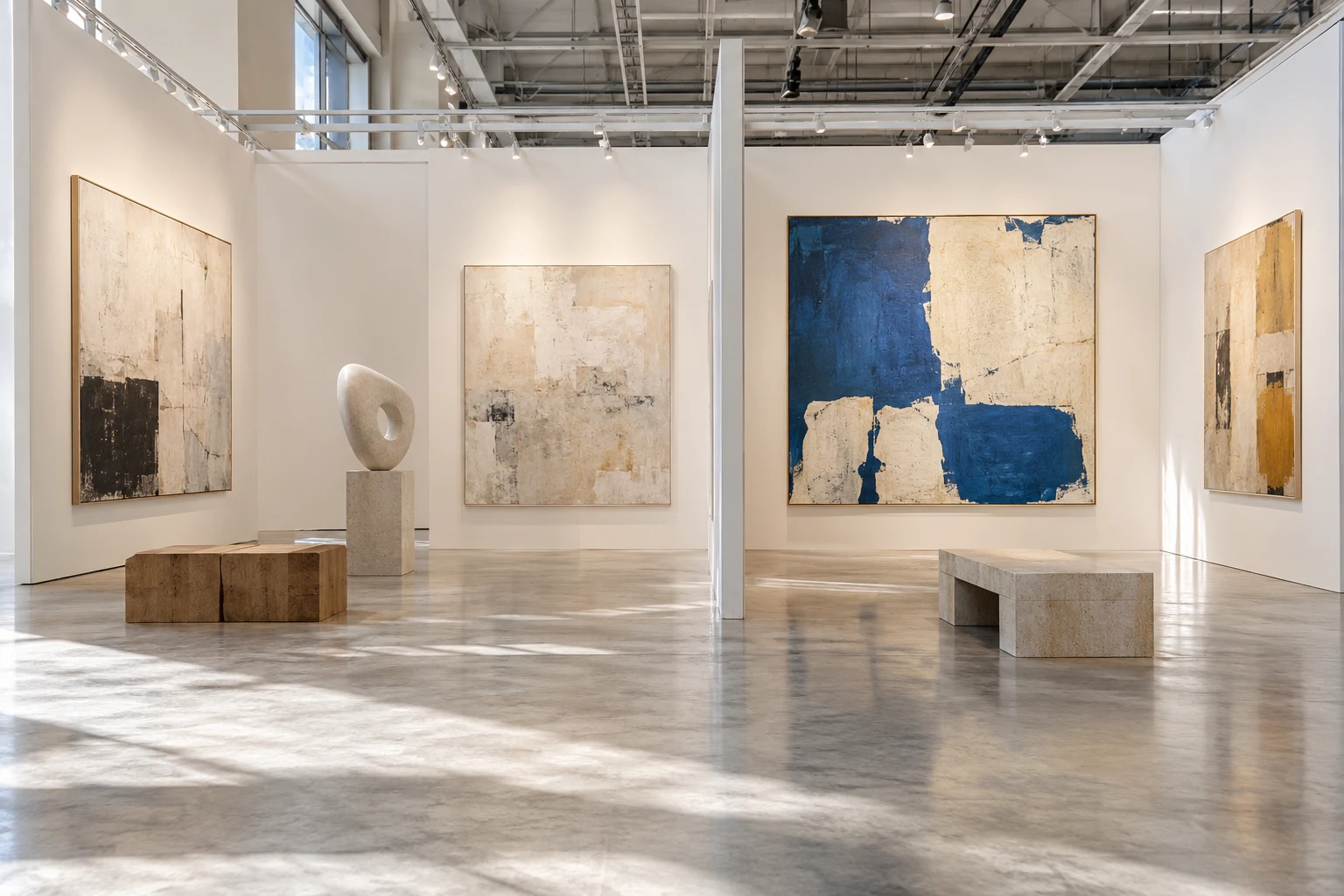
One possible plan is ten minutes to orient yourself, ten at each of three works, ten to compare or return, and ten to write. Adjust it to the venue, access arrangements and any timed media. These are editorial planning examples. Choose works where your attention stops, not necessarily the three most famous, and do not let the timetable overrule the experience.
Remember where you want to return
Use a map or a quick overview to identify three works and check whether the route permits revisiting. A title or location may be enough to remember one. Before reading a long explanation, write a sentence about what first attracts your attention. That gives you something to compare with the information you learn later, rather than deciding your response entirely from the label.
Begin with what you can see
Describe a small red area on the left or a bright empty half of the composition before writing lonely or anxious. Keeping observation and interpretation on separate lines helps you identify what prompted a feeling. MoMA's Slow Looking resource encourages attention to visual qualities and description. Stay at the allowed viewing distance; looking closely does not require touching a surface or crossing a barrier.
Read, then ask what changed
Look at the title, material, date and exhibition explanation, then return to the work. New information need not erase the first response. Perhaps something you assumed was paper is cloth, prompting a question about a fold. Keep facts from the label distinct from your own interpretation. With a companion, describe what each noticed before comparing impressions.
Return after the third work
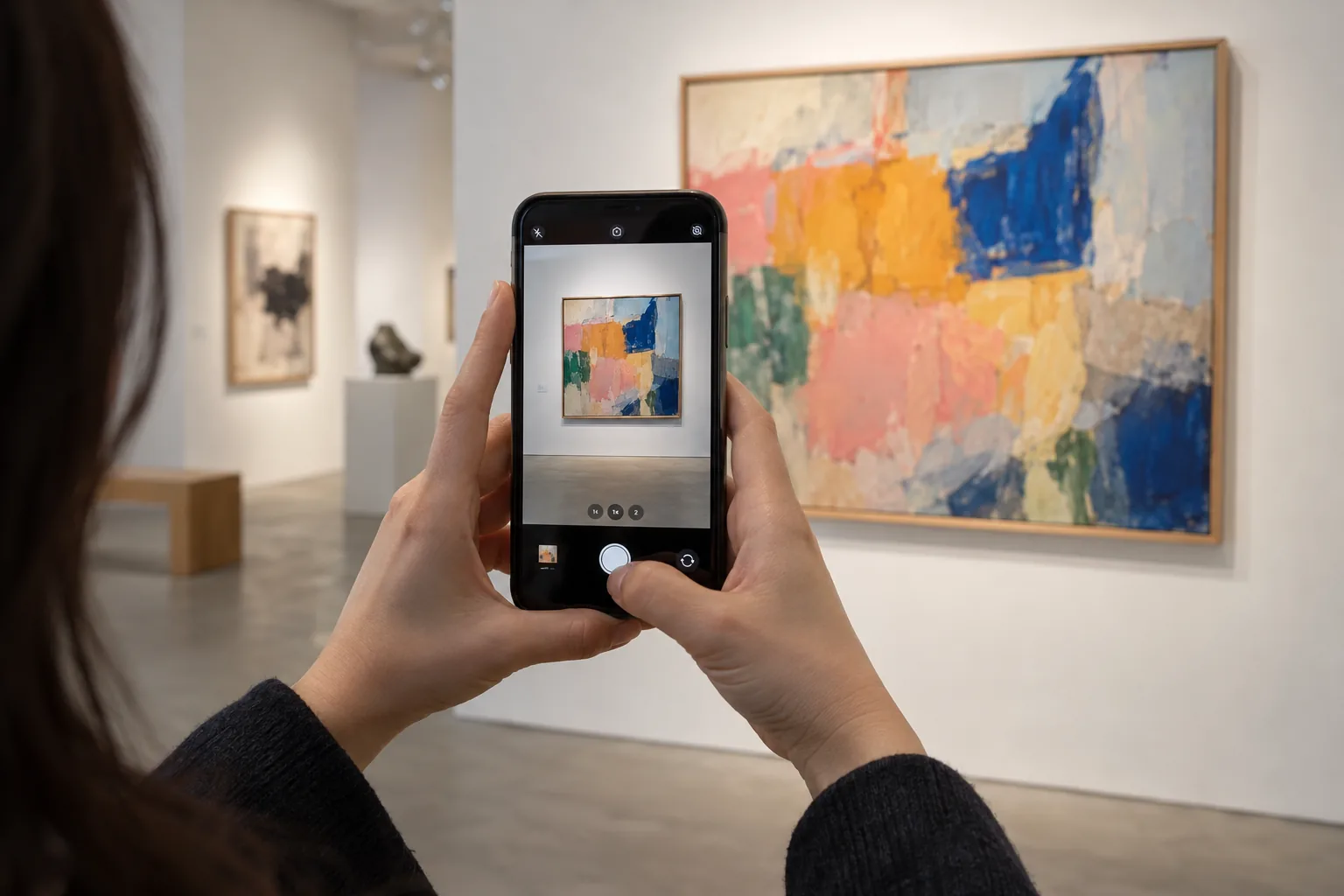
Another scale or material may change what you notice in the first work. If revisiting is impossible, compare your three notes at the end of the route. Mark repeated words and details unique to one work instead of forcing a ranking. Where photography is prohibited, a title and location can still support a thoughtful record. Collecting images and looking carefully are not the same activity.
Finish with three lines and a question
Write a visible element, your interpretation and what changed after reading. Add a question to carry into another visit, plus the exhibition title and date so the note is easy to find. The sixty-minute structure is our suggestion; the reference for observation and slow looking is MoMA's own resource: View source: www.moma.org