What ‘dry’ means in a wine glass: sweetness, acidity and tannin
A wine can smell fruity without tasting sweet, or feel drying while remaining fresh. Separate three impressions and turn them into a useful sentence for your next order.
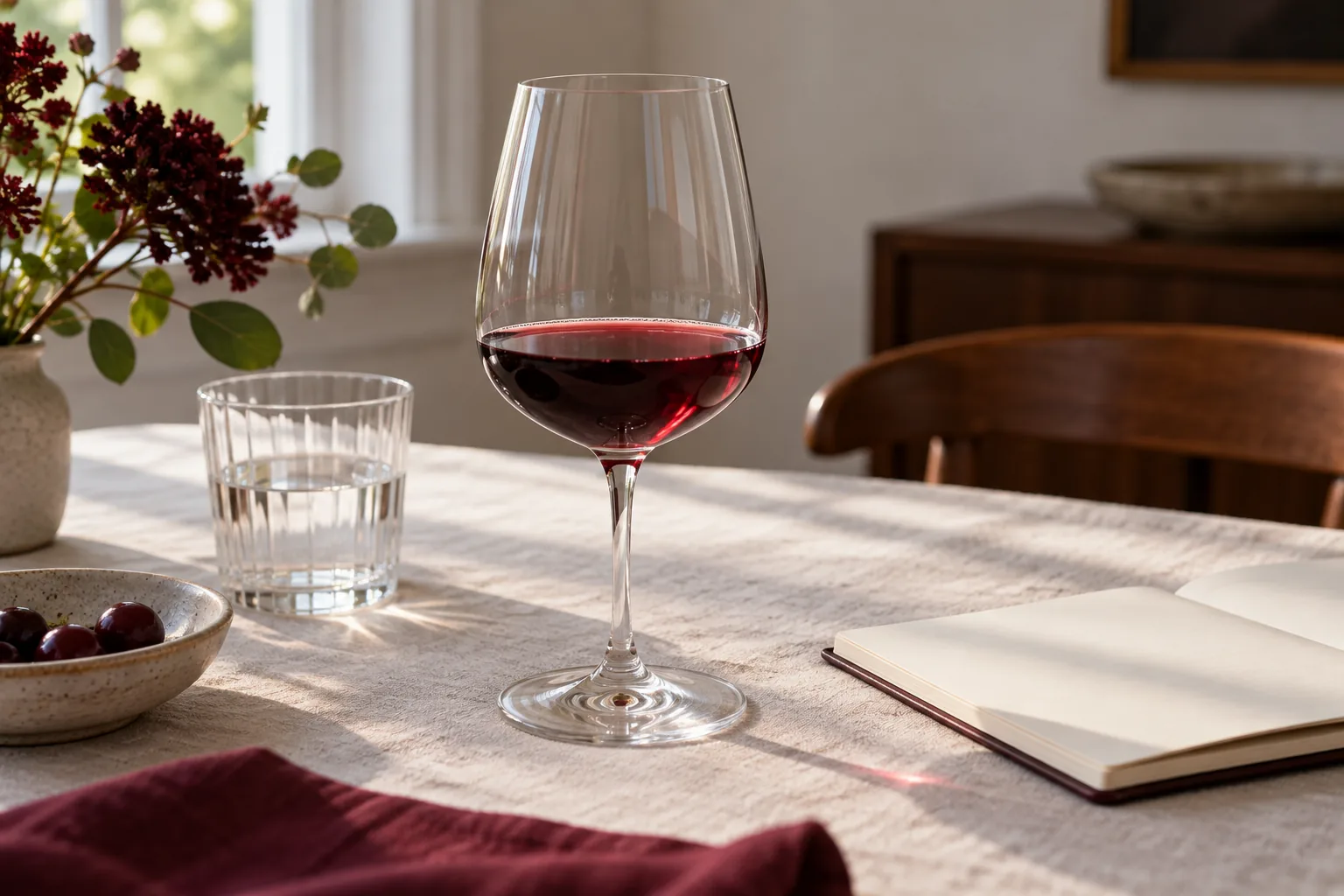
A wine can smell fruity without tasting sweet, or feel drying while remaining fresh. Separate three impressions and turn them into a useful sentence for your next order.
Separate a sweet-smelling aroma from a sweet taste
A ripe-fruit aroma in a wine ordered as a dry red need not mean the order was wrong. Put the aroma you notice and the sweetness you taste in different columns. ‘Clear fruit aroma / sweetness not prominent’ can be a useful pair of observations. There is no requirement to identify the grape or find a particular fruit. Start with broad families such as fruit, flowers or spice. If nothing distinct comes to mind, ‘the aroma seems faint’ is a better note than borrowing a descriptor you did not perceive.
For acidity, notice a mouthwatering response
WSET’s acidity guide suggests observing how the mouth waters after tasting. It also distinguishes this from the warmth or burning sensation associated with alcohol. Instead of calling everything ‘strong’, try ‘mouthwatering / little warmth’. Sweetness and acidity can also coexist, so a sweet impression does not establish low acidity. These separate observations make it easier to explain a preference without pretending to measure a wine chemically. Reference: View source: www.wsetglobal.com
A drying texture is a different observation
In a red wine, note a gripping sensation or a feeling of dryness around the gums separately from sweetness. WSET describes a drying, astringent sensation as a characteristic effect of tannin. Everyday uses of ‘dry’ can blur these ideas. When ordering, ‘little sweetness and not much gripping tannin’ is clearer than relying on that word alone. Record texture as texture rather than filling that column with an aroma name. Reference: View source: www.wsetglobal.com
Give the glass a little context
At the top of the note, write the producer, wine name, labelled vintage and alcohol strength, plus the date. Add whether it arrived chilled, had been standing for a while, or was tasted before or after food. A familiar wine name does not guarantee an identical vintage or serving situation next time. Build a record of ‘this glass felt like this’ rather than deciding that a grape always behaves one way. You can narrow the question within a glass already chosen; opening several bottles is unnecessary.
Write a before-and-after food impression
If food is present, keep an impression from before eating beside one from afterwards. ‘Acidity drew my attention first / after the food I noticed the fruit aroma more’ is an example of how to write the note, not a predicted result for every pairing. Rather than memorising a compulsory match, ask what changed during your own meal. Include the sauce or seasoning beside the dish name so a later comparison has more detail than simply ‘fish’ or ‘meat’. Your observation can remain useful without becoming a universal pairing rule.
Take three conditions to the next order
Finish with sweetness, acidity, gripping texture, aroma, serving context and one thing to change next time. An order might become: ‘Is there a glass with little sweetness, clear acidity and less gripping tannin?’ This is a sensory notebook for adults of legal drinking age, not a task to increase consumption. References checked on 27 October 2026. Basic sensory distinctions are informed by WSET; the notebook and ordering prompts are editorial suggestions, not a review claiming a particular wine was tasted or that drinking offers health benefits.