Five places to check when trying on a white shirt
Look beyond a straight-on mirror photograph. Check transparency, collar, cuffs, button gaps and movement across the back in the clothes you actually wear.
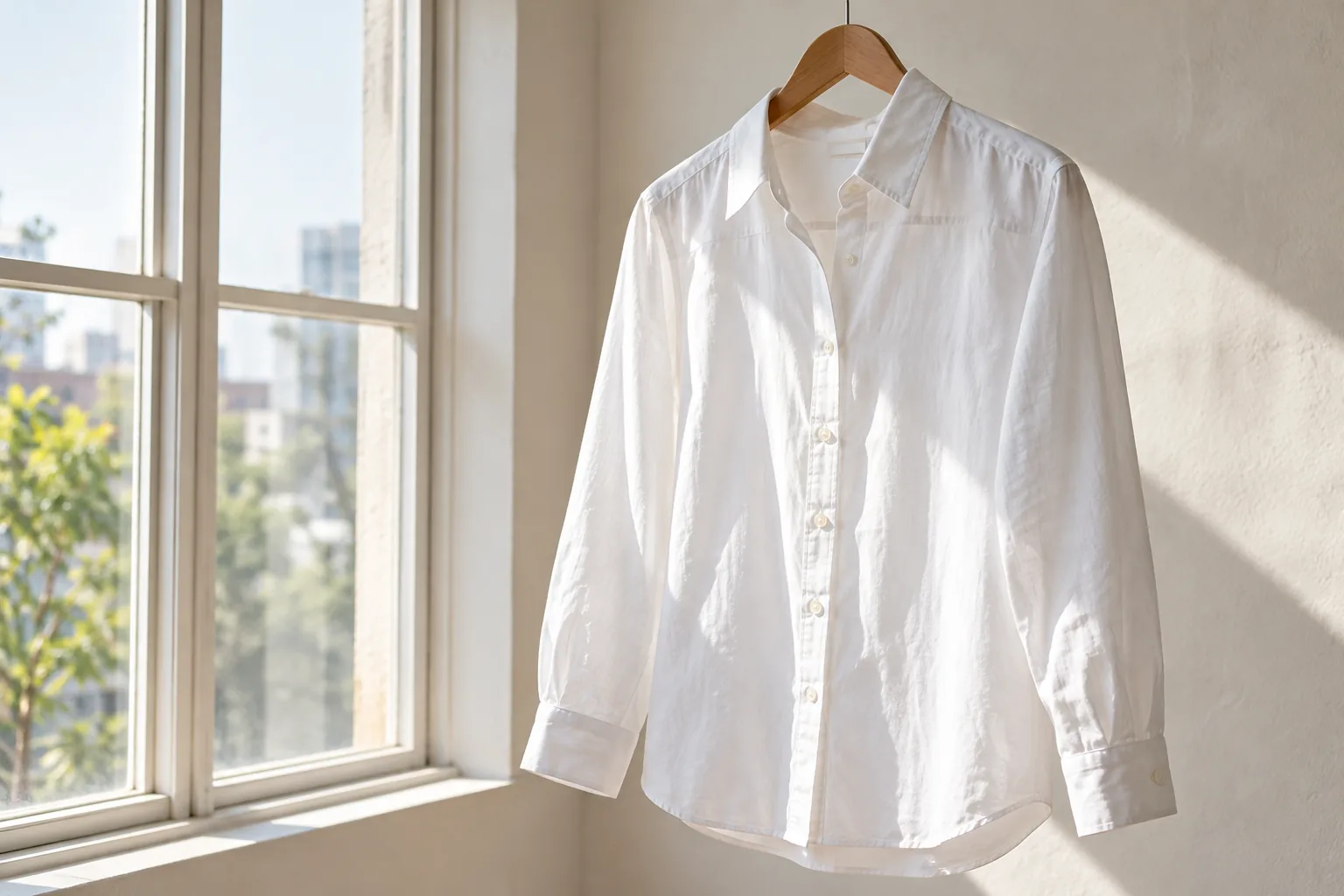
Look beyond a straight-on mirror photograph. Check transparency, collar, cuffs, button gaps and movement across the back in the clothes you actually wear.
Start with how you will wear it
Two white shirts may differ in ways that a price or fabric label cannot explain: transparency, pressure at the neck or movement across the back. Use the same checks in the same order. Decide whether you will tuck it in, wear it under a jacket or layer it over a T-shirt. The aim is to test those situations, not to prescribe one correct fit for every body.
Check transparency with your usual base layer
Holding fabric against a hand is not the same as wearing it. If possible, try the shirt with your normal underwear or base layer and inspect it in different light. Turn sideways as well as facing the mirror. If you do not plan to wear a base layer, compare denser fabrics rather than choosing something that will make you uncomfortable. No single underwear colour works identically for every skin tone and fabric.
Try the collar open and closed
Fasten the top button, then undo it as you normally would. Turn your head and look down. Notice pressure and whether the collar spreads awkwardly over a jacket. A shirt intended for a tie needs a different check from one worn open at weekends. Describe a movement, such as pressure when looking down, rather than merely calling a collar large or small.
Move your arms and inspect the button line
Bend an arm as if sitting at a desk, and check whether the cuff clears your watch. If you roll sleeves, try that too. Then bring your arms forward and sit down to see whether the front gaps between buttons. Compare button placement, room across the chest and fabric drape before changing the whole shirt size to solve a single local issue.
Check the back with a bag or reaching movement
Reach forward or try the posture used with your everyday bag. Notice pulling near the shoulder blades, a rising hem or fabric gathering under the arms. A relaxed pattern can create folds without being the wrong size; distinguish those from movement being restricted. For a tucked shirt, sit and stand once. Your comfort matters more than a perfectly smooth photograph.
Finish with care and combinations
If two shirts feel equally comfortable, compare their care labels and the trousers you already own. Fibre names alone do not determine safe ironing settings; GINETEX advises following the garment's instructions. Consider whether that care fits your routine. Keep a five-box note: transparency, neck, wrist, button gaps, back. Official care-symbol reference: View source: www.ginetex.net