38 mm or 40 mm? Three checks beyond the diameter
Compare lug length, case thickness and where the strap turns down. Use the same wrist and everyday movements rather than deciding from one measurement.
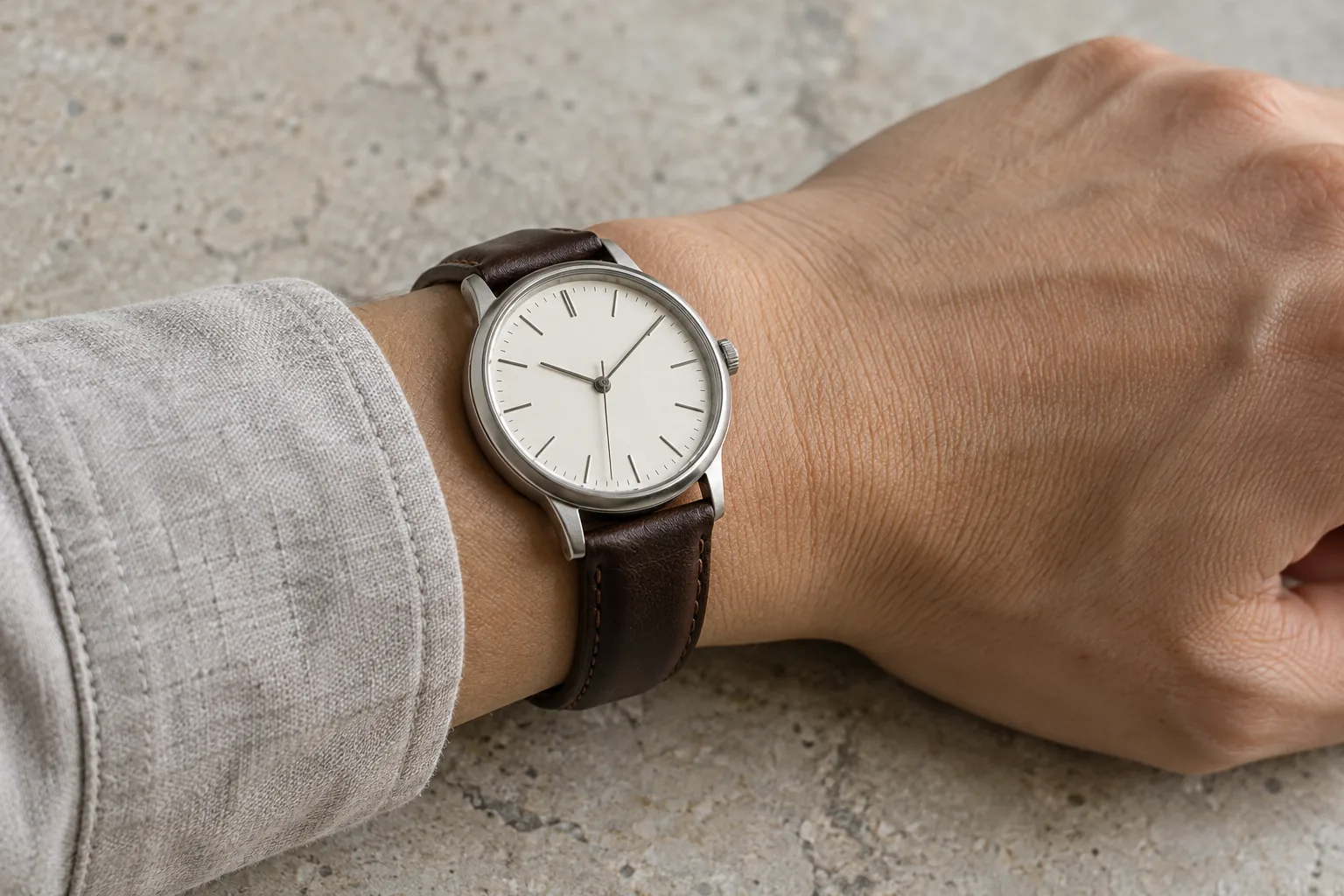
Compare lug length, case thickness and where the strap turns down. Use the same wrist and everyday movements rather than deciding from one measurement.
A diameter is a starting point
The 38 mm and 40 mm figures here describe a comparison, not particular products. A wide dial opening or heavy bezel can change apparent size, and wrists differ in shape as well as circumference. Neither small nor large is automatically more comfortable. Alternate the candidates on the same wrist on the same day so the numbers can be connected to an actual experience.
Look at where the lug tips sit
Lugs connect the case to the strap. Their end-to-end length helps describe how far a watch extends along the wrist. Relax your arm and look at whether the ends sit comfortably or lift beyond the upper surface. Curved and straight lugs of similar length can behave differently. Use the measurement to explain the fit, rather than as a universal pass-or-fail limit.
Check thickness with a sleeve and a desk
View the case side, then move a familiar shirt or jacket cuff over it. Crystal height, bezel shape and the case back can affect the feel of similar stated dimensions. Rest your hand in a desk posture and notice the clasp position. A crown pressing into your hand or a sleeve constantly catching may matter more in daily use than a pleasing front view.
Notice the first movement of the strap
Does the strap turn down immediately, or does an end link extend farther out? An unadjusted shop sample can also give a misleading impression. Ask what adjustment is possible and check whether the watch shifts to one side. If considering another strap, confirm connection width and proprietary parts; matching a width alone does not establish compatibility.
Take comparable photographs
A watch near a phone camera can appear exaggerated. Keep camera, arm position and distance similar for both candidates. One view looking down and another in a mirror with the whole arm visible can help memory. Light changes reflections and dial colour. Photographs cannot reproduce pressure, weight or comfort, so do not let one dramatic image replace the fitting.
Write down the awkward movement
Try four lines: lug lift, cuff clearance, crown contact when bending the hand, clasp position. Add whether you enjoy reading the dial throughout a day. There is no need to decide immediately if differences remain unclear. This is a fitting method, not a brand ranking; functions, servicing and operating limits must be checked in each model's documentation.