Reading steel in light: brushing and polishing
Follow surface grain, edges and moving reflections. Describe what is visible before making claims about quality, materials or maintenance.
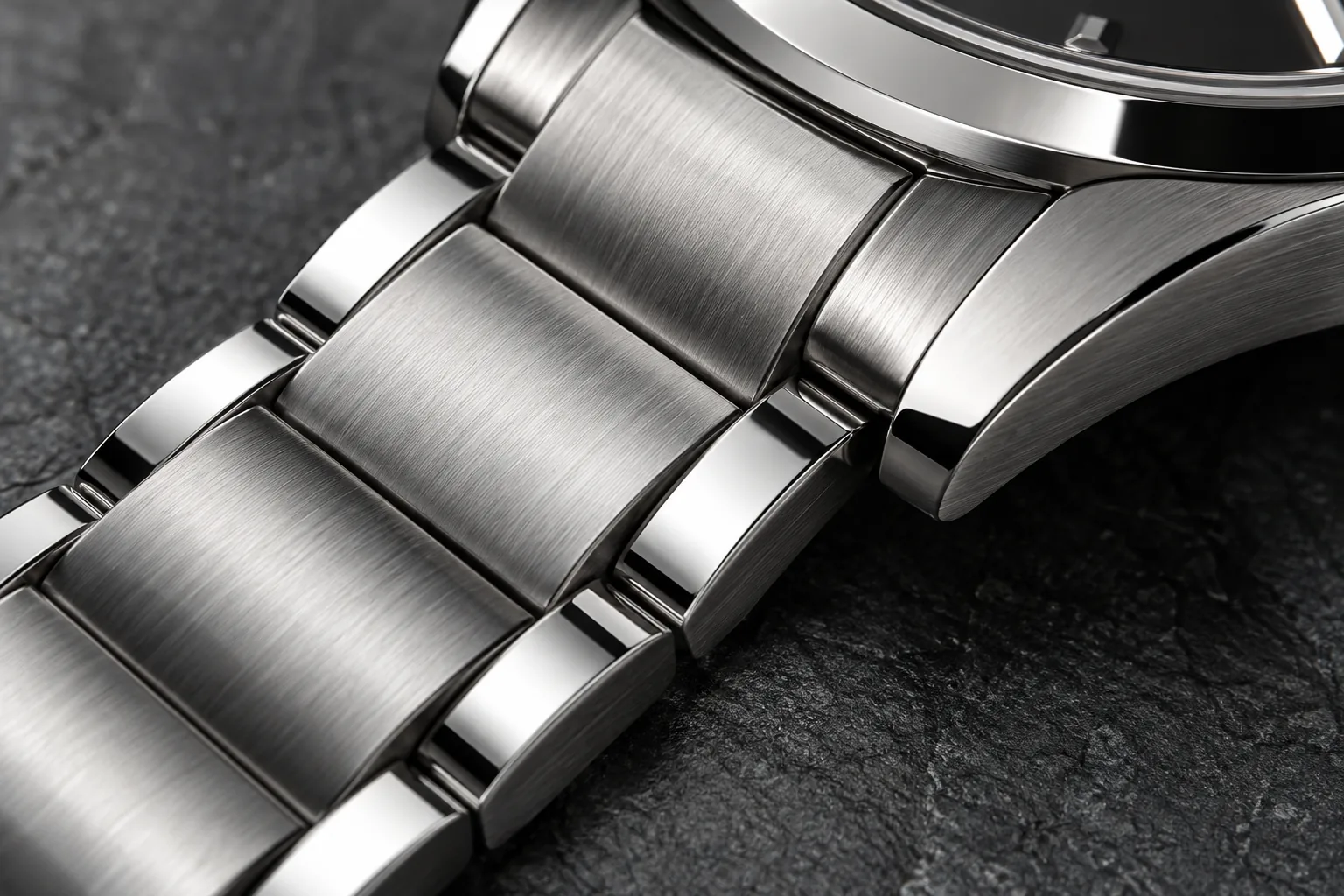
Follow surface grain, edges and moving reflections. Describe what is visible before making claims about quality, materials or maintenance.
One material can have several expressions
Some watch surfaces reflect their surroundings clearly; others scatter light along fine directional lines. These can be useful visual distinctions between polishing and brushing. Coatings and other processes may also be present, so a photograph cannot establish a manufacturing process or exact material. Begin with the case top, side and lug boundary, rather than using brightness as a quality score.
Compare broad light with a small reflection
Soft window light can reveal the overall form; a smaller source can make the direction of a reflection easier to follow. Turn the wrist gently and notice when a plane changes from light to dark or an edge catches a highlight. No rubbing or testing tool is needed. Changing the viewing condition can reveal proportions absent from a straight-on dial photograph.
Trace the direction of the grain
Notice whether visible lines run along the case, across it or outward from a centre. Adjacent bracelet links can create a rhythm of light and shade. Follow where a grain stops and a reflective bevel begins. First look from an ordinary wearing distance, then inspect a detail if it interests you. Understanding the design and searching for a microscopic mark are different activities.
Describe wear by location
Separate marks on crystal, case and clasp. A fine line that appears only at one angle can look much larger in a photograph. When seeking service, explain when you noticed it and whether function changed. Before requesting refinishing, ask what would happen to the original grain and boundaries, including the option of leaving the surface alone.
Start care within the model's instructions
A clean soft dry cloth is a cautious starting point for surface moisture and dirt. Do not immerse an unfamiliar watch or try to remove marks with an abrasive cloth without checking water resistance, strap and finish. Seiko's water-resistance guidance includes wiping away moisture and sweat with a soft dry cloth. Follow your specific model's cleaning and service instructions. Reference: View source: www.seikowatches.com
An image shows design, not a specification sheet
Our brand imagery can suggest contrasts of colour, outline and metallic light, but it cannot verify an alloy grade, movement performance or water-resistance rating. The same limit applies to an illustrative editorial close-up. A precise description names the plane or line that catches the light; it does not invent an unseen specification. Add one location to the word shiny the next time you describe a watch.