Comfort beneath the eaves: a contemporary reading of the hanok stay
Read Bukchon Binkwan and SEAMARQ’s Hoanjae through courtyards, thresholds, verandas and modern comfort. A considered stay begins with how the house is lived in.
Read Bukchon Binkwan and SEAMARQ’s Hoanjae through courtyards, thresholds, verandas and modern comfort. A considered stay begins with how the house is lived in.
Between an old form and a comfortable night
A hanok stay cannot be explained by a tiled roof alone. The relationship between room and courtyard, a view seen from a low seat and the angle of daylight can all change the rhythm of a day. Yet an attractive building still needs a usable route to the bathroom, somewhere for luggage and understandable heating controls. Those details allow the architecture to be enjoyed for longer.
Seoul’s Citizen Hanok School material explains heated floors, timber-floored spaces and eaves in relation to climate and daily life. That starting point makes contemporary interpretation more interesting than the addition of new bathrooms to old-looking decoration. The question becomes how sitting, walking and resting in the house connect with the needs of its guests today.[1]
Separate the building’s different dates
Restoring an older house, constructing a new house through traditional methods and adapting hanok elements in a modern building are different projects. Before judging authenticity, ask what was built or repaired when. The age of a building and the date it became accommodation are also separate facts.
An atmosphere of age is not evidence of protected heritage status, and a new bathroom does not prove that the entire structure is new. Ask the operator about any unclear history. Understanding what changed gives the stay a more specific focus: retained structure, newer windows, a reorganised courtyard. These questions can explain the space more usefully than the brands of its furniture.
Bukchon Binkwan: a place to look over the city
Seoul Stay’s host-provided listing for Bukchon Binkwan by Rakkojae describes room-specific private bathrooms and verandas. Current rooms and services still require confirmation. The useful architectural idea is that a relatively small room can revolve around one place connecting its interior with a view outside.[2]
In an urban hanok, ask who uses the veranda or courtyard. Is it exclusive to the room, does another guest pass through, or must you cross a shared space to reach it? Being able to walk into the neighbourhood is part of the attraction, but the neighbourhood is also somebody’s home. Keep early photography and late conversation from intruding on the people who live around the property.
Hoanjae: a hanok supported by hotel operations
Architect Doojin Hwang’s account of Hoanjae at SEAMARQ Hotel describes four constituent buildings and the relationship between the inner house’s raised veranda and Gyeongpo Lake. It also records underground service infrastructure. The relevant lesson is the attention given to both the visible traditional spaces and the less visible work required to operate them.[3]
Comfort can depend on maintenance and meal preparation happening without interrupting guests. Nevertheless, an architectural account does not establish the accommodation unit currently for sale. Confirm whether a booking is for the whole complex, one building or one room, and how guests reach the main hotel’s restaurants and facilities. The existence of a hanok annex does not mean that every service is included in its room rate.[4]
Match low-level living to the people staying
For someone who enjoys sitting on the floor, a low table can become a memorable part of the stay. For someone with difficulty bending or rising, the same arrangement may be uncomfortable. Establish whether beds are raised, supportive chairs are available and bathroom thresholds require a step. The name hanok alone does not settle the interior arrangement.
For a family trip, begin with the person who finds movement most difficult. Ask about the route from parking to the room, luggage assistance, stairs, outdoor sections in wet weather and night lighting. When accessibility information is absent, request specific dimensions or photographs instead of assuming suitability. Respect for a traditional building and consideration for a companion’s comfort can guide the same choice.
Do not read silence from a photograph
A courtyard behind a wall can look peaceful, but actual noise depends on roads, shared routes, other rooms and equipment. Ask about room separation, windows, quiet periods and planned events. Hearing natural sounds and being insulated from other guests are different conditions.
Seasonal arrangements also matter. Confirm heating control and bathroom warmth for winter, and cooling, ventilation, screens and shading for summer. If particular smells or materials cause discomfort, describe the need directly. No general statement about hanok architecture can promise a specific building’s insulation or a better night’s sleep. Knowing how the property supplies everyday comfort allows you to enjoy its atmosphere with clearer expectations.
Tea and breakfast give the day a shape
If tea is an important part of the trip, check whether equipment is provided in the room or the experience is separately booked. Attractive cups do not establish that a particular tea or service is included. Confirm breakfast location, timing and dietary arrangements so that the morning can remain unhurried.
One possible itinerary is to leave arrival day fairly open, learn the relationship between the room and courtyard, then return to the same seat the next morning to notice the different light. Follow that with a walk or a meal. This is our observation exercise, not a programme promised by either property. Stay within authorised spaces and treat other guests’ rooms and gardens as private.
Read the stay through three scenes
After arrival, learn the route between bed, bathroom and luggage before choosing a seat at the window or veranda. Notice where sitting feels comfortable rather than photographing continuously. If dinner is outside, establish the return route and entry arrangements beforehand.
At night, respect the boundaries shared with other rooms. Before packing next morning, return to the same seat and observe the changed light. Record one or two materials or structural details that remain memorable. These are suggested observation exercises, not activities promised by either property.
Compare plans alongside service boundaries
A room’s internal area and a site area including courtyards are not equivalent figures. Mark exclusive and shared spaces separately when comparing an urban room with a hotel annex. A beautiful veranda matters differently if it is not available with the room you book.
Also map meals: where can tea be prepared, where is breakfast served, and does reaching it require an outdoor walk? The aim is not a single authenticity score. A useful comparison connects the space you can actually use with the comfort you need, in both good weather and rain.
Luxury as room for daily life
At the end of the comparison, consider whether one companion can sit outside while another sleeps, whether returning late will disturb the next room, and where luggage goes after unpacking. A modest number of furnishings can support these needs; lavish decoration does not automatically do so.
Bukchon Binkwan and Hoanjae offer different starting points: individual accommodation in an urban setting and a hotel’s hanok annex. Neither choice is completed by the word hanok. Read the building’s history, the exact unit offered, present-day comfort and the life around it. Time beneath the eaves becomes special when your own day can unfold naturally within the architecture.
Sources and editorial note
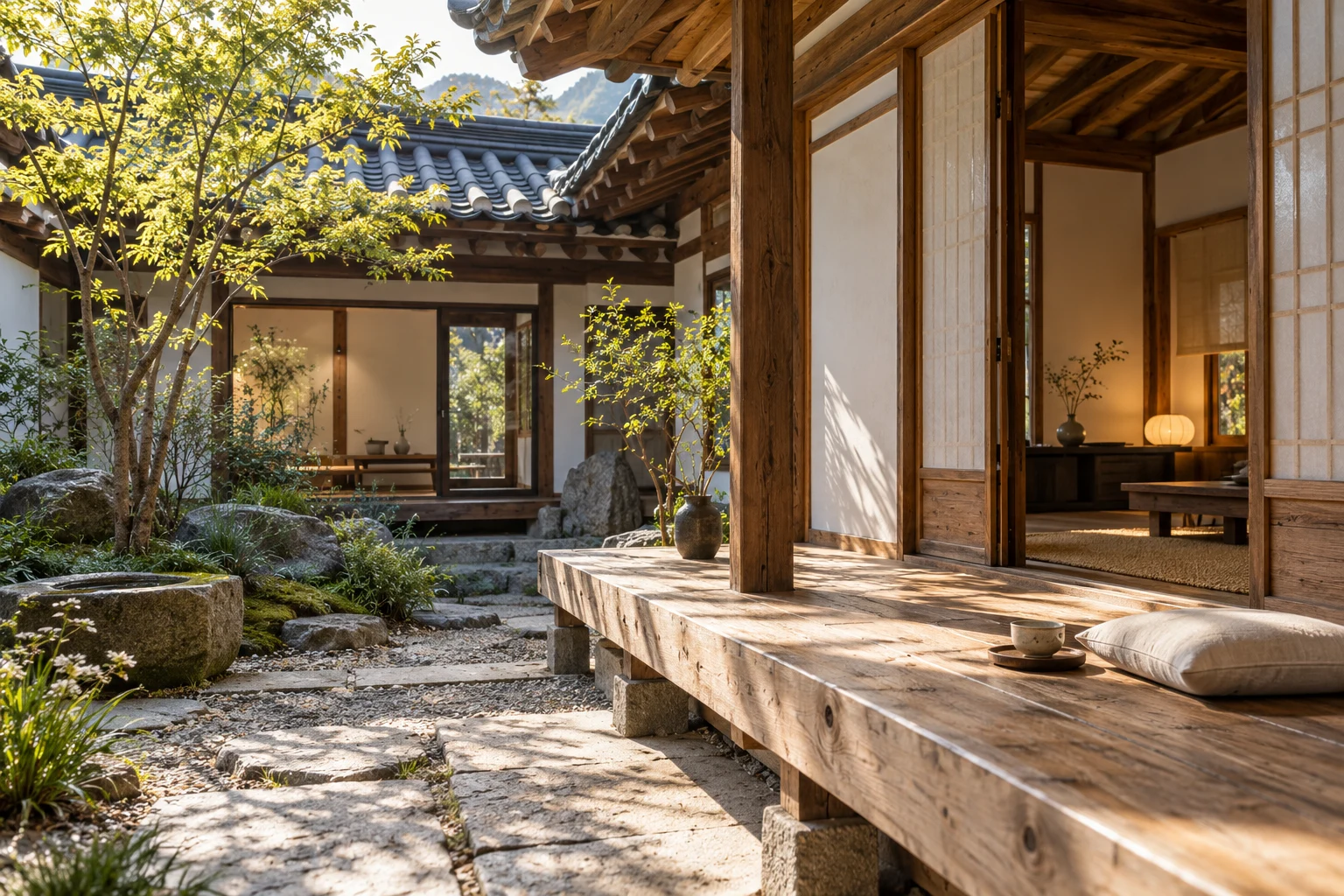
The cover is an AI-generated editorial illustration. It is not a documentary photograph of a particular place, product or person discussed in this article.
Sources checked on 1 November 2026. This article combines the public sources below with our own framework for choosing and observing. It is not a first-hand stay, visit or service review. Confirm current arrangements and availability directly for your intended date.
[1] Seoul Citizen Hanok School — Architecture and climate · View source: hanok.seoul.go.kr
[2] Seoul Stay — Rakkojae Bukchon Binkwan · View source: stay.visitseoul.net
[3] Doojin Hwang Architects — Hoanjae, SEAMARQ Hotel · View source: djharch.com
[4] SEAMARQ Hotel — Rooms · View source: www.seamarqhotel.com