Buying your first artwork: from the wall to the record
Consider the object, edition, documentation and complete cost, then plan transport, rights and care. A first acquisition becomes easier to judge when its practical questions are visible.
Consider the object, edition, documentation and complete cost, then plan transport, rights and care. A first acquisition becomes easier to judge when its practical questions are visible.
Choose a scene in everyday life
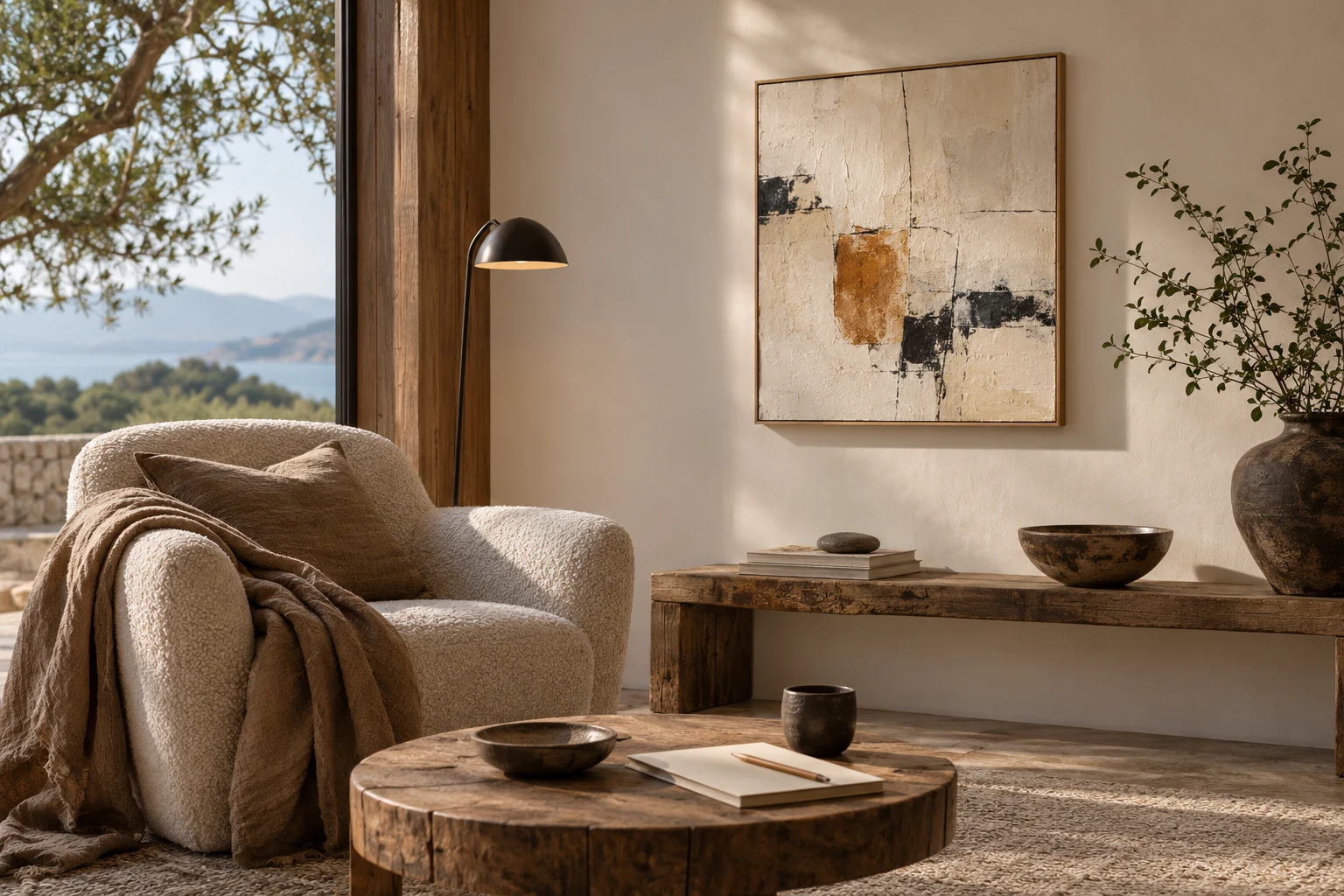
A first acquisition need not be an entrance examination into collecting. Imagine when you would see it: opening the curtains, sitting at dinner, or coming home from work. That scene makes scale, colour and viewing distance more tangible, giving the choice a relationship with your life before its reputation takes over.
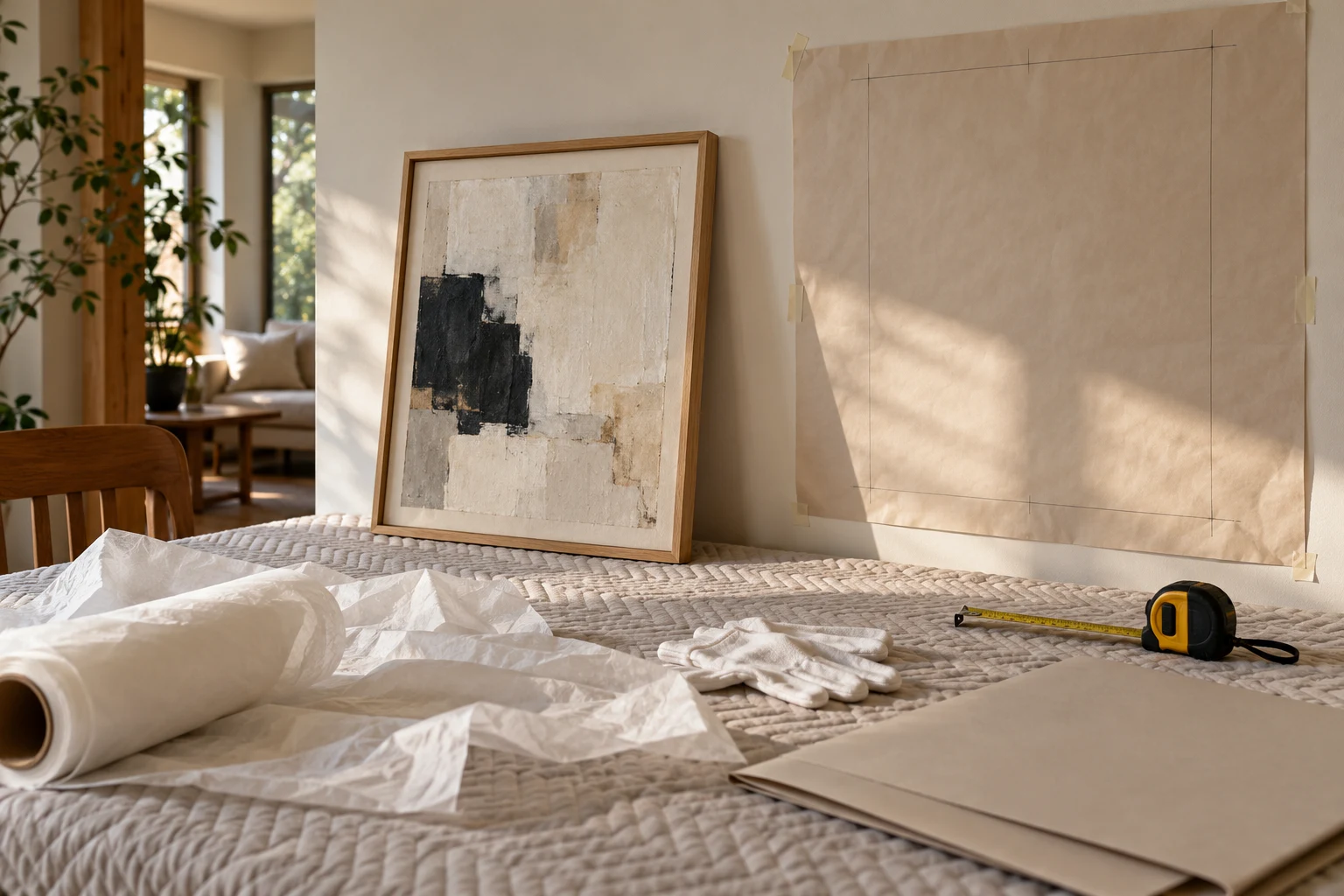
Check the complete dimensions, including frame and fittings, against sockets, doors, furniture and daylight. A full-size paper template can reveal how much space an image on a small screen actually occupies. Use an appropriate temporary fixing method so that testing a position does not damage the wall.
Consider a later change of mind or home: could it move to another room, where would packing materials live, and might a future move require specialist transport? These practical questions make a conversation with a seller more precise even before you have requested a price.
Name the object precisely
Clarify whether the offer is a unique painting, an artist-made or authorised print, a photographic edition, or a reproduction poster. Each can provide a worthwhile experience. The essential question is whether the object you expect matches the one described in the sales documentation.
Tate’s limited-edition guide explains numbering, materials and authentication. Its editions have an artist’s signature or an artist-signed accompanying certificate, while a separate standard certificate is not automatically issued in every case.[1] The example shows why the mere presence or absence of one document cannot answer every authenticity question.
Compare the artist, title, year, medium, support, object and frame measurements, and signature location across the listing and quotation. Where relevant, ask about printing or casting dates. Replace an ambiguous label with a written description that identifies the actual object being offered.
An edition number is not a league table
Imagine a print marked 3/30. Ask which edition the notation identifies, how its size and separate proofs are structured, and whether the image exists in other dimensions or materials. A lower number alone should not become your evidence of better artistic quality or a higher future price.
If you encounter AP, PP or production on demand, request an explanation specific to the work. Practices should not be assumed identical across artists and publishers. Compare dimensions, materials, production information, signatures and condition rather than treating similar online images as interchangeable objects.
You may personally prefer a particular number. That preference can be part of your decision without becoming a universal rule of value. If prices differ, ask which conditions explain the difference and decide whether they matter to you before accepting the higher figure.
Condition questions are part of care
Examine permitted views of the edges, reverse and frame as well as the front. Ask about folds, colour changes, surface marks and restoration. Some features may be intentional. The useful task is to distinguish the artist’s material choices from later changes, without pretending to make a specialist diagnosis yourself.
For a remote purchase, request recent overall and detail photographs plus a condition description. Establish when the images were made and how a discrepancy at delivery should be reported. A general warning about screen colour does not answer questions about dimensions, damage or missing components.
For a costly object or a restoration concern, consider an appropriately independent specialist. Check the scope and cost of that advice. A condition report, a valuation and an authenticity opinion answer different questions; possessing one should not be read as having completed all three.
Read authenticity and ownership records together
Responsible Art Market recommends examining ownership history and its supporting records.[2] Begin by establishing the seller’s identity, authority to sell, and the documentation connecting the object to its maker or distribution route. An old work and a newly made work by a living artist will not require identical enquiries.
For a certificate, inspect the issuer, object description, signatures or identifiers and consistency with the sales information. Its existence does not end every question. If accounts disagree or a material gap remains, request supporting evidence and corrected documents before deciding whether to proceed.
Handle personal details in provenance records with care and retain only what the transaction requires. Keep the invoice, object description and written answers together, with original documents separately protected. A clear purchase date and title in the folder name will help you locate them after installation.
Put the complete cost on one page
List framing, packing, transport, insurance, installation and applicable tax or customs costs beside the object price. Mark each included, additional or pending. For international transactions, clarify currency, exchange timing and fees. Applicable tax and import requirements depend on the transaction; no rate or exemption is promised here.
For a purely illustrative budget of KRW 2 million, establish framing and delivery first, then see what remains for the work. This is an arithmetic example, not a recommended purchase price. Leave an allowance for unquoted items instead of silently entering zero for them.
Read cancellation, return, deposit, balance and delivery terms, including when responsibility for the object changes. Do not assume every art transaction follows an ordinary online-shop policy. Resolve differences between spoken and written explanations and identify the final terms before making payment.
Separate the object from image rights
Owning a work and using its image in products, advertising or a website are separate questions. WIPO explains that ownership of a material object is distinct from copyright.[3] Check what the purchase documents actually transfer and investigate the permissions relevant to any planned publication or commercial use.
A personal social-media post should not automatically be treated as universally permitted or universally forbidden. Terms, rights-holder guidance and local law may matter. Explain the intended use clearly, including whether the work fills the image or appears within a wider room scene.
Crediting the artist does not resolve every permission. Clear information about rights can nevertheless identify a permitted way to share your enjoyment. For publishing or commercial plans, separate rights clearance from the object purchase. This section identifies the question; it does not determine the legality of a particular use.
Receiving and living with the work
Prepare a safe unpacking area before planning the wall photograph. Follow the transport instructions, use professional help where needed, and check components and documents. Record any discrepancy through the agreed process, including photographs and timing. Ask how long the packing should be retained.
For works on paper, pay particular attention to location and framing. The Canadian Conservation Institute explains that light damage is irreversible and advises avoiding direct sun and unstable environmental conditions.[4] Discuss suitable supports and framing; do not begin with improvised adhesives or household stain-removal methods.
Keep an installation photograph, date and location as a reference for later changes. Buying well does not require personally resolving every specialist question. It means choosing on understood terms, obtaining appropriate answers and looking after the records together with the object you wanted to live with.
Sources and editorial note
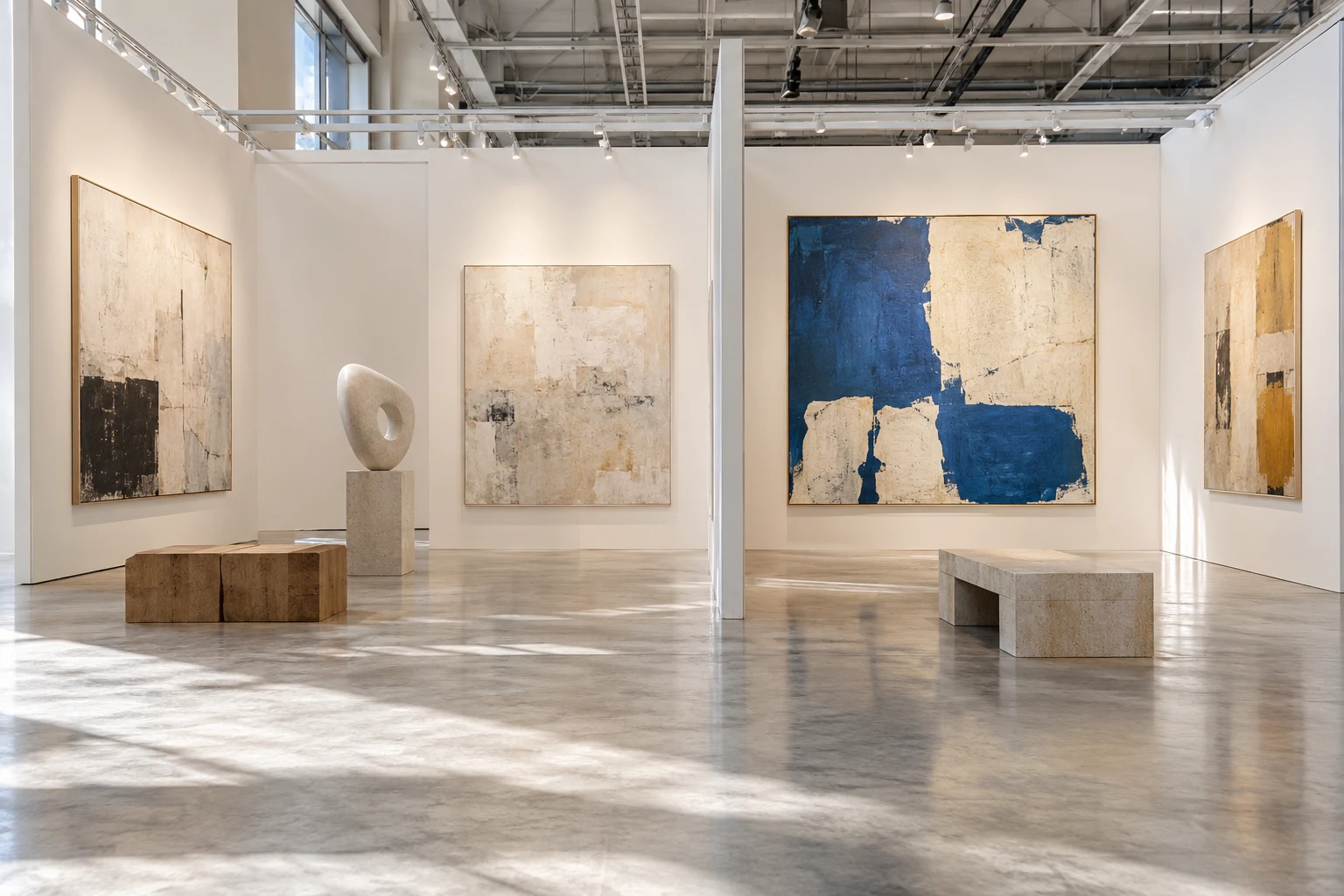
The cover is an AI-generated editorial illustration. It is not a documentary photograph of a particular place, product or person discussed in this article.
Sources checked on 1 November 2026. This article combines published primary sources with editorial examples; it does not report an on-site interview or authenticate, value or offer any particular artwork for sale.
[1] Tate — Limited Edition Buyers Guide · View source: shop.tate.org.uk
[2] Responsible Art Market — Art Transaction Due Diligence Toolkit · View source: www.responsibleartmarket.org
[3] WIPO — Rights assessed during clearance · View source: www.wipo.int
[4] Canadian Conservation Institute — Basic care: Works of art on paper · View source: www.canada.ca