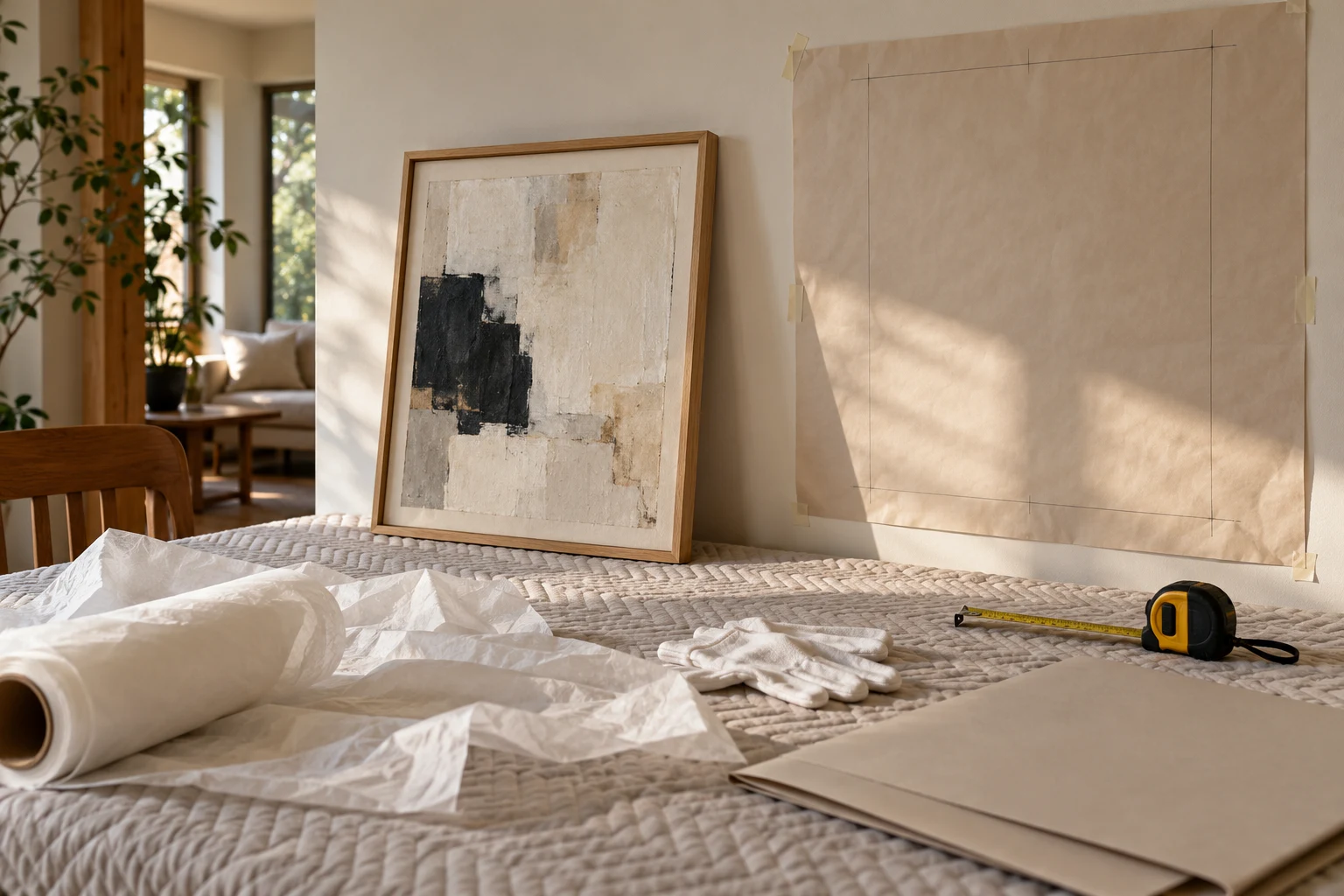
Before hanging an A3 poster: wall, space, light and frame
Paper size is not frame size. Use a full-size paper template, consider the glazing gap and check the wall in different light before ordering.

Paper size is not frame size. Use a full-size paper template, consider the glazing gap and check the wall in different light before ordering.
Measure beyond the sheet of paper
An A3 sheet is 297 by 420 mm, but a mat and frame change the outer dimensions. Check the actual finished frame size rather than assuming the paper will fit a narrow wall. Notice the printed area, borders and any signature that a mat might cover. A paper template of the outer size lets you test the proportion before committing to a frame.
Look from where you normally sit
Decide whether the picture will mainly be viewed from a sofa, dining chair or passing through a corridor. Place the template at the intended position and check from the front and side. Use a temporary method appropriate to the wall surface; some tapes leave marks. A single hanging height cannot suit every room. Give priority to the position from which you will actually enjoy it.
Ask how paper is separated from glazing
A window mat can provide a gap between an artwork and its glass or plastic glazing. Ask about the construction rather than only the front material. An inexpensive decorative poster and a sensitive original may need different decisions, and valuable or vulnerable work merits conservation advice. Do not attach the entire back of a work with an arbitrary adhesive just to make it appear flat.
Check morning and afternoon light
The Canadian Conservation Institute explains that light can fade colours and damage paper irreversibly, and advises avoiding sunlight from windows or skylights. A wall that looks shaded during one visit may receive sun later. UV-filtering glazing does not justify leaving paper in strong light indefinitely. Consider changing humidity, heat and steam as well as the view from the room.
Confirm weight and fixing before colour
Wall material, frame weight and permitted fixings come before choosing black or timber. Follow the frame and fixing manufacturers' load and installation instructions, and seek experienced help if uncertain. Check any conditions in a rented property. Consider the consequences of a fall above a bed or in a busy route; a small-looking frame is not automatically safe on one adhesive hook.
Bring six details to the framing discussion
Record the measured paper size, what may be covered, whether a mat is included, outer dimensions, glazing material and hanging method. Add a photograph of the wall. After hanging, check the seated view and changing light again. This is about finding an everyday place for the image as well as choosing a frame. Conservation reference: View source: www.canada.ca